
In April 2024, the US calcium chloride market saw prices trend higher, supported by improving construction activity and relatively resilient manufacturing conditions. Supply remained broadly sufficient, with no significant shortages reported, while downstream demand, inventory levels and pricing continued to be key factors shaping market sentiment.
Construction Demand Supports the US Calcium Chloride Market
The construction sector is a major downstream consumer of calcium chloride in the United States, with applications including concrete construction, dust control and road maintenance. As a result, changes in construction activity can have a direct bearing on market demand.
Construction activity in the US improved gradually during the spring of 2024, while higher downstream inquiries provided some support to the calcium chloride market. Market analysis published in April identified the improving construction sector as one of the factors contributing to higher US calcium chloride prices.
However, the recovery remained modest, with current market conditions not yet pointing to a period of strong demand growth.
US Manufacturing Activity Shows Signs of Stabilization
US manufacturing activity is another important indicator of demand conditions for industrial chemicals.
S&P Global data showed that the US Manufacturing PMI fell below the 50 threshold several times in 2023, reflecting weakness across the manufacturing sector. Conditions improved in early 2024, with the PMI rising to 50.7 in January and 52.2 in February before easing slightly to 51.9 in March.
Chart 1: US Manufacturing PMI — Apr 2023 to Apr 2024
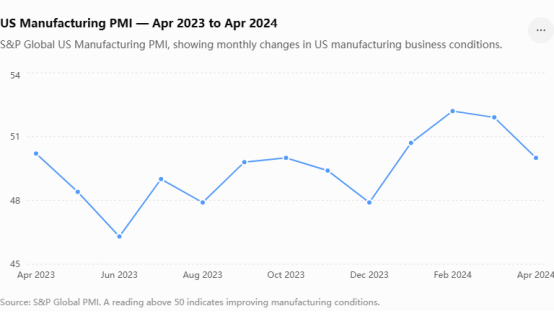
The PMI declined to 50.0 in April, pointing to a slowdown from the stronger momentum seen at the start of the year. However, manufacturing conditions remained firmer than during the middle of 2023.
For the calcium chloride market, the improvement in manufacturing conditions provides some underlying demand support, although the April reading suggests that the recovery in downstream demand remains relatively subdued.
Supply Conditions Remain Relatively Stable
Unlike some chemical markets affected by tight supply, the US calcium chloride market did not face any significant shortages in April 2024, with inventories remaining at relatively healthy levels.
As a result, the price increase during the month was driven more by improving construction demand and stronger market inquiries than by a material tightening in supply. Ample inventories also helped limit the potential for a sharp further rise in prices.
For importers and industrial consumers, inventory availability, supply reliability and delivery lead times remain important considerations when making purchasing decisions.
Diversified Applications Provide Underlying Demand Support
Beyond construction, calcium chloride is widely used in road de-icing, dust control, water treatment, food processing and other applications. This broad end-use base helps reduce the market’s exposure to demand fluctuations in any single sector.
While some areas of the US industrial economy continued to see cautious demand and inventory adjustments, the diverse range of calcium chloride applications provided a degree of underlying support for overall market demand.
US Calcium Chloride Market Outlook Remains Cautious
Overall, the US calcium chloride market in April 2024 was marked by a modest improvement in demand, broadly stable supply conditions and continued price support.
The construction sector remained a key source of demand, while manufacturing activity had improved from the weakness seen in mid-2023. However, the Manufacturing PMI eased to 50.0 in April, suggesting that the recovery in downstream demand remained limited.
In the near term, the US calcium chloride market will continue to be influenced by construction activity, manufacturing demand, inventory levels and supplier pricing. For both suppliers and buyers, product quality, supply reliability, inventory availability and delivery performance will remain important considerations in market competition and procurement decisions.
Sources: S&P Global PMI, publicly available market analysis and industry data.