
In May 2024, changes in global energy markets created new cost pressures and competitive challenges for the U.S. salt chemical industry.International crude oil prices retreated somewhat from their April highs, with Brent crude prices hovering around $80 per barrel for most of May. Meanwhile, U.S. natural gas prices rebounded from their March and April lows, with Henry Hub prices rising significantly during the month. Compared with crude oil prices, natural gas and electricity costs have a more direct impact on the production costs of salt chemical products such as caustic soda, calcium chloride, and industrial salt.
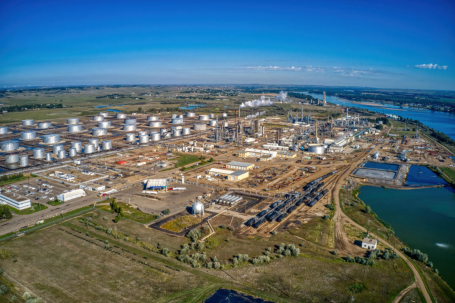
Figure 1. Oil Refinery in the United States
Source: U.S. Geological Survey (USGS), Public Domain.
International Crude Oil: Prices Declined in May as Geopolitical Risk Premiums Eased
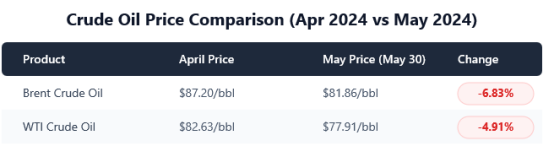
In May 2024, international crude oil prices trended downward. In early May, a significant increase in U.S. crude oil inventories put downward pressure on international oil prices; On May 3, WTI and Brent crude oil futures settled at $78.11 and $82.96 per barrel, respectively. Oil prices subsequently recovered somewhat; on May 17, WTI crude oil futures moved back above $80 per barrel, closing at $80.06 per barrel, while Brent crude futures rose to around $84.00 per barrel. However, the rebound was short-lived. As of May 30, WTI and Brent crude futures closed at $77.91 per barrel and $81.86 per barrel, respectively, representing month-over-month declines of 4.91% and 6.83%. The May monthly average prices for WTI and Brent crude oil futures were $78.62 and $83.00 per barrel, respectively, down $5.77 and $6.00 per barrel from April.
The key factors weighing on oil prices include the following: First, market expectations for global oil demand growth have declined. In its May report, the IEA lowered its forecast for global oil demand growth in 2024 to 1.1 million barrels per day, a reduction of 140,000 barrels per day from the previous month’s forecast—marking the second consecutive month of downward revisions. Second, concerns about supply disruptions caused by a further escalation of the Middle East conflict eased. The IEA noted that concerns over a broader conflict in the Middle East subsided in April and early May, which also exerted some downward pressure on oil prices; Third, with U.S. economic data weakening and crude oil inventories rising, the market anticipates that the Federal Reserve’s interest rate cuts will be further delayed, and high interest rates continued to weigh on economic activity and oil demand. The combination of these multiple factors drove crude oil futures prices to a nearly three-month low at the end of May.
U.S. Natural Gas Prices Rebounded, Increasing Chemical Production Costs
In May 2024, U.S. natural gas prices rebounded sharply from their March and April lows. According to EIA data, the Henry Hub spot price rose rapidly from the $1.55–$1.67/MMBtu range at the end of April, reaching $2.207/MMBtu on May 7. Prices continued to rise in mid- to late May, with the settlement price for U.S. Henry Hub natural gas (NG) futures reaching $2.671/MMBtu on May 21, up 13.95% from the previous week's settlement price. During the week of May 27–31, the weekly average price of the next-month Henry Hub natural gas futures contract was approximately $2.66/MMBtu. The front-month Henry Hub natural gas price reached $2.57/MMBtu on May 30, representing a 31.12% month-over-month increase. The average Henry Hub price in May was approximately $2.15/MMBtu, up nearly 30% month-over-month.

Why Did Natural Gas Prices Rebound in May?
First, with electricity demand to rise during the summer, natural gas-fired power generation increased by 5.5% year-over-year; Second, frequent supply-side issues have emerged globally: several gas fields in Norway are undergoing maintenance, and an Australian LNG project has been subject to unscheduled maintenance, tightening the global natural gas supply-demand balance; Third, demand for LNG exports has rebounded, driven by the resumption of production at the Freeport LNG facility; Fourth, daily natural gas production in the United States has continued to decline, falling by approximately 3% year-over-year. As natural gas is an important cost component for the salt chemical industry, its sharp rebound from recent lows increased production costs for energy-intensive producers.
Impact on the U.S. Salt Chemical Industry
U.S. Chlor-Alkali Industry: Spring Maintenance and Higher Energy Costs Tighten Caustic Soda Supply
The U.S. chlor-alkali industry is facing dual pressures from rising energy costs and a contraction in supply. The chlor-alkali industry is highly energy-intensive, with electricity representing a major component of production costs. Higher natural gas prices can also increase overall energy and operating costs across the chemical sector. In May, some U.S. chlor-alkali producers entered their spring maintenance period, causing the operating rate of U.S. chlor-alkali facilities to drop to approximately 81%—down from 82% in April, Operational adjustments at some facilities have impacted market supply, leading to tight conditions in the domestic spot market for caustic soda flakes. Against this backdrop, some downstream buyers have begun evaluating imported sources as an alternative.
Soda Ash Industry: Cost Advantages of Natural Soda Ash Become Apparent,Export Competitiveness Remains Strong
Unlike the chlor-alkali industry, the U.S. soda ash industry relies primarily on Wyoming’s abundant trona resources for production. Globally, proven trona deposits are mainly distributed in the United States, China, and some African countries, Wyoming hosts one of the world's largest trona deposits. The Wyoming trona soda ash production process also provides U.S. producers with a significant cost advantage. Production costs can remain below approximately $100 per metric ton under favorable energy and operating conditions.Even against the backdrop of a natural gas price rebound in May 2024, U.S. soda ash export FOB prices have remained near the $150 per metric ton level over the long term.

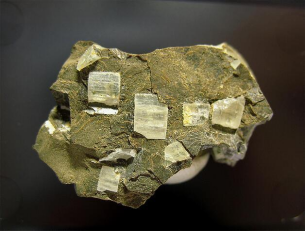
Figure2. Trona Ore from Wyoming, U.S.
Source: U.S. Geological Survey (USGS), Public Domain.
The resource advantage has helped maintain the competitiveness of U.S. soda ash exports, particularly in Asian and Latin American markets where buyers continue to seek reliable long-term supply sources.
Conclusion
In May 2024, the global energy market showed a divergence between crude oil and natural gas prices: oil prices generally trended lower, while U.S. natural gas prices rebounded from recent lows. International crude oil prices fluctuated downward due to factors such as the fading of geopolitical premiums and downward revisions to demand forecasts, while U.S. natural gas prices rebounded sharply as a result of a recovery in LNG exports, declining production, and rising expectations for summer demand.
For the salt chemical industry, changes in energy prices can have a direct impact on production costs. In the chlor-alkali sector, rising gas prices combined with spring maintenance led to tight supplies of the U.S. caustic soda market, prompting some downstream buyers to seek imported alternatives; in the soda ash sector, the cost advantage of the U.S. soda ash industry became even more pronounced amid energy price fluctuations, allowing the industry to maintain its export competitiveness. This pattern indicates that, against a backdrop of intertwined global energy transition and geopolitical uncertainty, structural differences in energy costs are reshaping the global supply landscape of the salt chemical industry—producers with access to low-cost energy and abundant resources are likely to maintain or strengthen their competitive positions.