
US Calcium Chloride Prices Rise in October on Higher Feedstock Costs and Firm Construction Demand
Published: 2024-10-31 | Region: United States
In October 2024, U.S. calcium chloride prices moved higher, supported by rising feedstock costs and relatively tight supply. Construction-sector demand remained broadly stable, providing some underlying support, although elevated financing costs and weather-related disruptions in some regions continued to weigh on end-user demand. Market participants will continue to monitor feedstock costs, supply availability and downstream purchasing activity for further indications of price direction in the near term.
Higher Feedstock Costs Support US Calcium Chloride Prices
In October 2024, U.S. calcium chloride prices moved higher, supported by rising feedstock costs and relatively tight supply. The increase was primarily attributed to higher calcium carbonate costs and limited availability in the domestic market.
Rising calcium carbonate costs added to production expenses for calcium chloride producers, putting upward pressure on supplier offers. With supply remaining relatively constrained, higher production costs were more readily reflected in downstream pricing.
Tight supply also provided additional support to the market. With availability limited, procurement activity had a greater influence on spot-market conditions, while producers and suppliers faced less pressure to lower offers.
Overall, the October price increase in the U.S. calcium chloride market was driven mainly by higher production costs and relatively tight supply, rather than a significant acceleration in end-user demand.
Construction Demand Provides Additional Market Support
On the demand side, the U.S. calcium chloride market remained broadly stable in October, with construction continuing to represent an important downstream application sector.
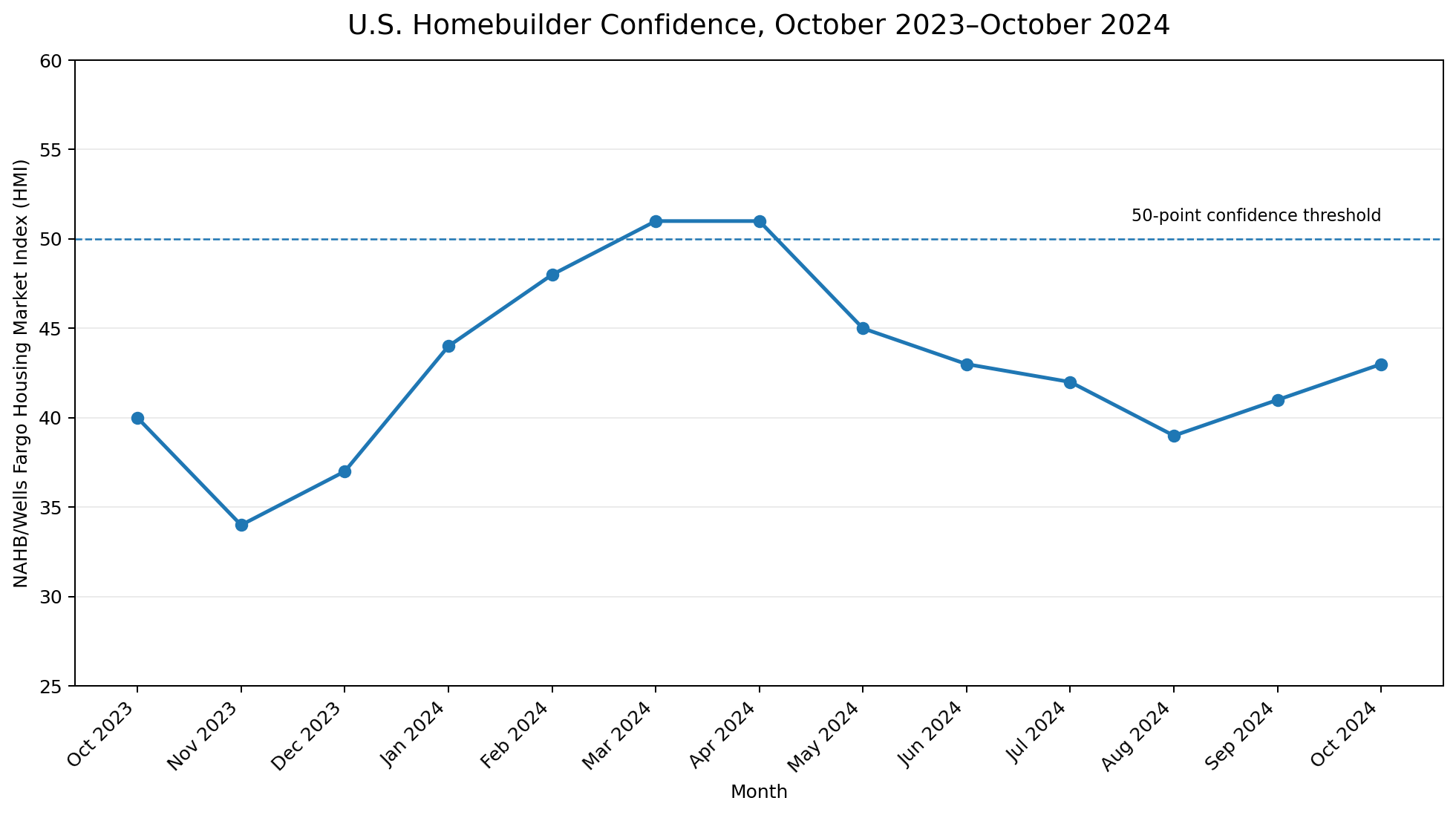
Calcium chloride is widely used in construction, road maintenance, dust control and concrete-related applications, making construction activity an important factor influencing market demand. In October, the NAHB/Wells Fargo Housing Market Index rose for a second consecutive month, increasing to 43 from 41 in September and reaching its highest level since June. The improvement indicated somewhat stronger expectations among homebuilders for future sales conditions.
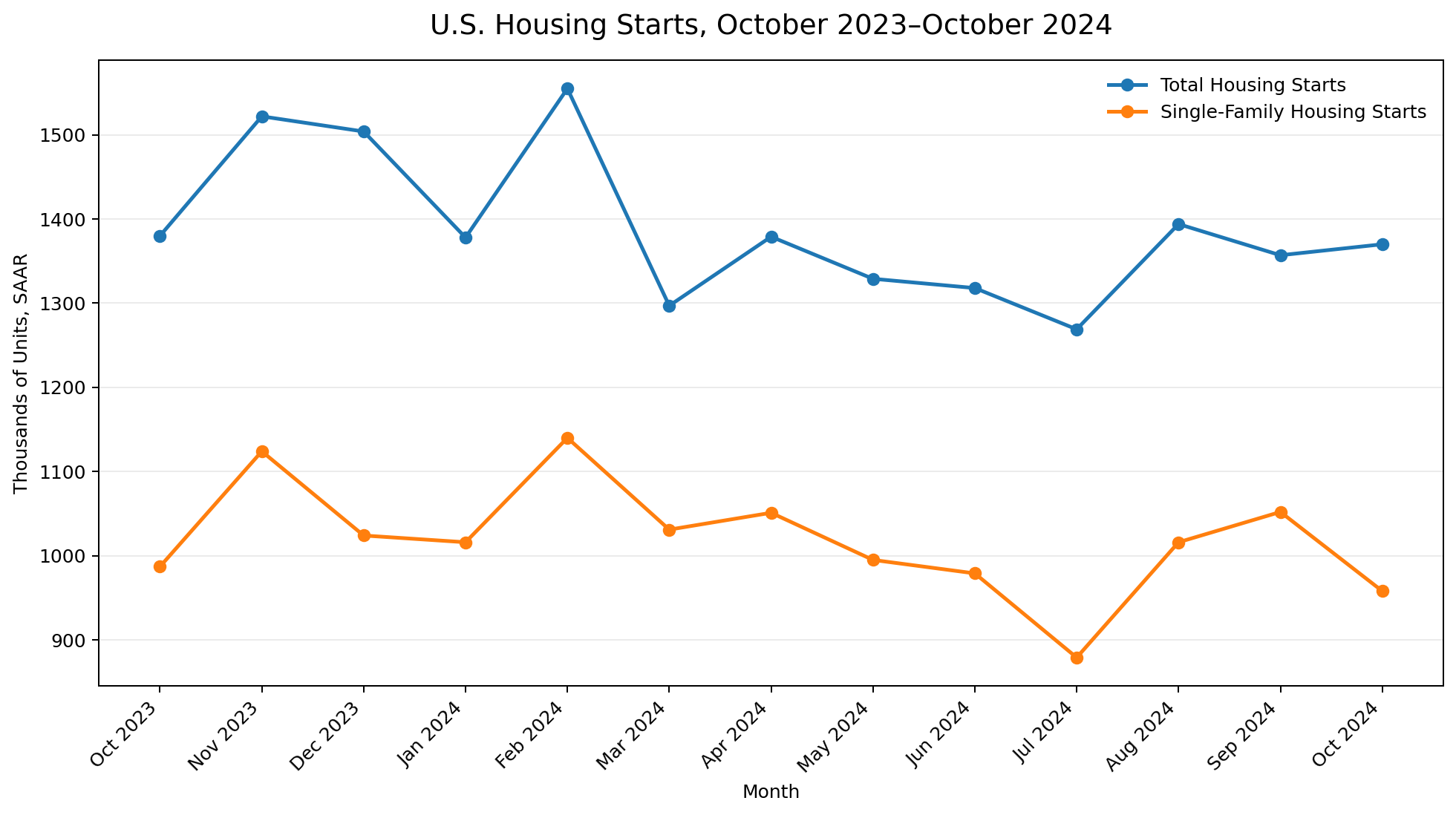
However, high financing costs continued to weigh on residential construction activity. U.S. housing starts fell 3.1% month over month in October, while single-family housing starts declined 6.9%. Hurricanes Helene and Milton also disrupted construction activity in some regions during the month.
As a result, the construction sector should not be viewed as the primary driver of a significant increase in calcium chloride demand in October. Instead, relatively stable construction activity provided underlying support for the market, while demand growth remained limited by financing costs and weather-related disruptions.
Supply Availability Remains a Key Market Factor
In addition to feedstock costs and downstream demand, supply availability remained an important factor influencing the U.S. calcium chloride market in October.
By the end of the month, calcium chloride supply in the U.S. remained relatively limited. With no significant increase in availability, higher feedstock costs added to producers’ cost pressures and provided further support for market pricing.
In the U.S. market, calcium chloride availability is influenced by domestic production, production economics, logistics and supplier inventory levels. If supply recovery remains limited while downstream procurement holds steady, prices are likely to remain relatively firm in the near term.
Conversely, a sustained increase in production and a gradual rebuilding of inventories could ease supply-side pressure. In that scenario, the upward pressure on prices from higher feedstock costs could begin to moderate.
US Calcium Chloride Market Outlook Remains Firm
Looking ahead, the U.S. calcium chloride market is expected to remain relatively firm in the near term.
Rising costs for feedstocks such as calcium carbonate continue to add to producers’ cost pressures, while supply availability remains relatively limited. At the same time, downstream procurement, particularly from the construction sector, is expected to remain broadly stable, providing continued support for market pricing.
Market participants will continue to monitor feedstock costs, domestic supply, inventory levels and construction-sector demand. If supply availability improves while end-user demand remains largely unchanged, the scope for further price increases could be limited.
Overall, the U.S. calcium chloride market in October 2024 was characterized by higher prices, relatively tight supply and broadly stable demand. Rising feedstock costs and limited availability were the main factors supporting prices, while steady procurement from the construction sector provided additional underlying support. Going forward, market direction will depend largely on supply recovery, production economics and downstream purchasing activity.
Sources: NAHB/Wells Fargo Housing Market Index; Census Bureau / HUD