
Soda ash, also known as sodium carbonate (Na₂CO₃), is a fundamental raw material supporting a broad range of industries ranging from glass manufacturing to detergents, textile processing, water treatment, chemical synthesis, ceramics, metallurgy and selected food applications.
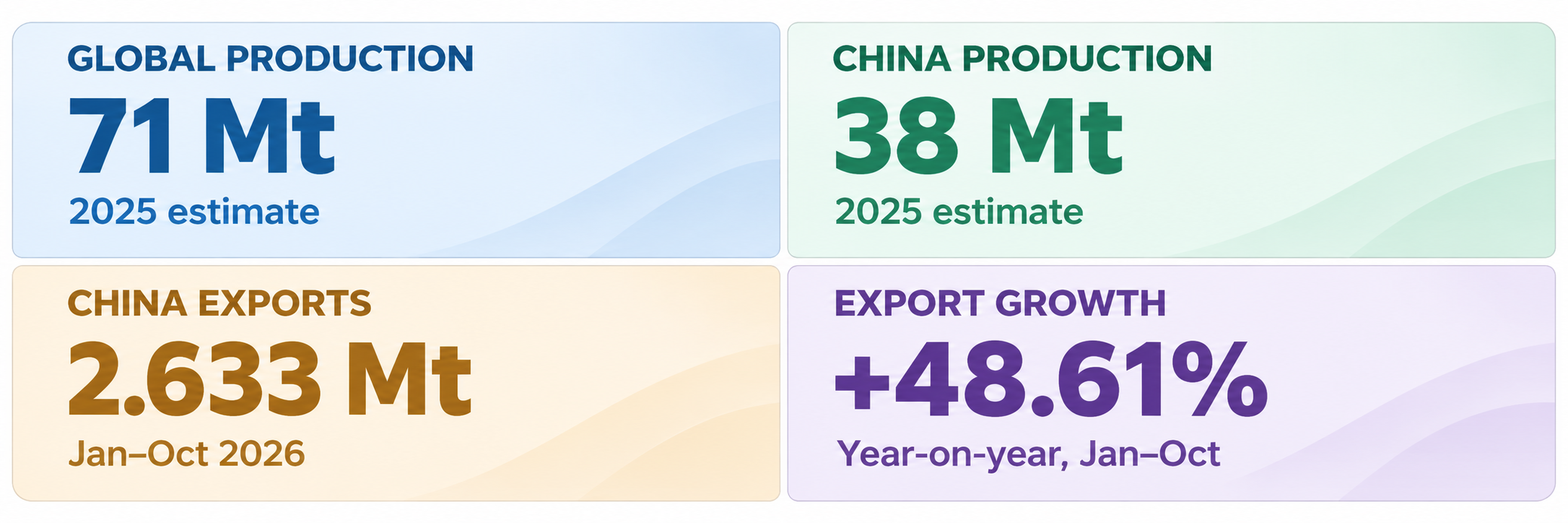
In the first ten months of 2026, China exported 2.633 million metric tons of soda ash, up 48.61% year on year. October shipments alone reached 351,700 tons, 64% above the same month in 2025. Overthe same period, global demand growth has slowed from 8.5% in 2024 to 1.4% in 2025, with Chemical Market Analytics forecasting 0.5% growth for 2026. New capacity in China, softer international pricing and uneven demand across downstream industries are reshaping the global soda ash market. While growing export availability is expanding sourcing opportunities for international buyers, it also makes supplier selection more critical. Product grade, batch-to-batch consistency, delivery reliability and total landed cost remain essential considerations in any procurement decision.
For industrial buyers, the objective should extend beyond securing the lowest quotation. It is about identifying a technically suitable and dependable supply partner capable of delivering consistent quality at a competitive overall cost. A well-structured sourcing strategy can help manufacturers balance procurement efficiency with long-term operational reliability.
Global Supply: Production Concentration and Cost Structures
United States Geological Survey (USGS) estimates that global soda ash production reached approximately 71 million metric tons in 2025. China produced about 38 million tons, followed by the United States at 12 million and Türkiye at 6 million. Together, these three countries represented roughly 80% of world output. The same USGS assessment divides global production into approximately 19 million tons of natural soda ash and 52 million tons of synthetic soda ash.
Production concentration matters because changes in operating rates, maintenance, export policy, energy costs and freight availability in a small number of producing regions can influence international trade flows. The production routes also have different cost structures. Natural soda ash is recovered from trona or sodium-carbonate-rich brines, while synthetic production generally uses salt and limestone-based processes. USGS notes that natural producers in China, Türkiye and the United States benefit from relatively low production costs and lower environmental impacts compared with synthetic production. Actual competitiveness still depends on plant efficiency, energy, feedstock, logistics and product requirements.
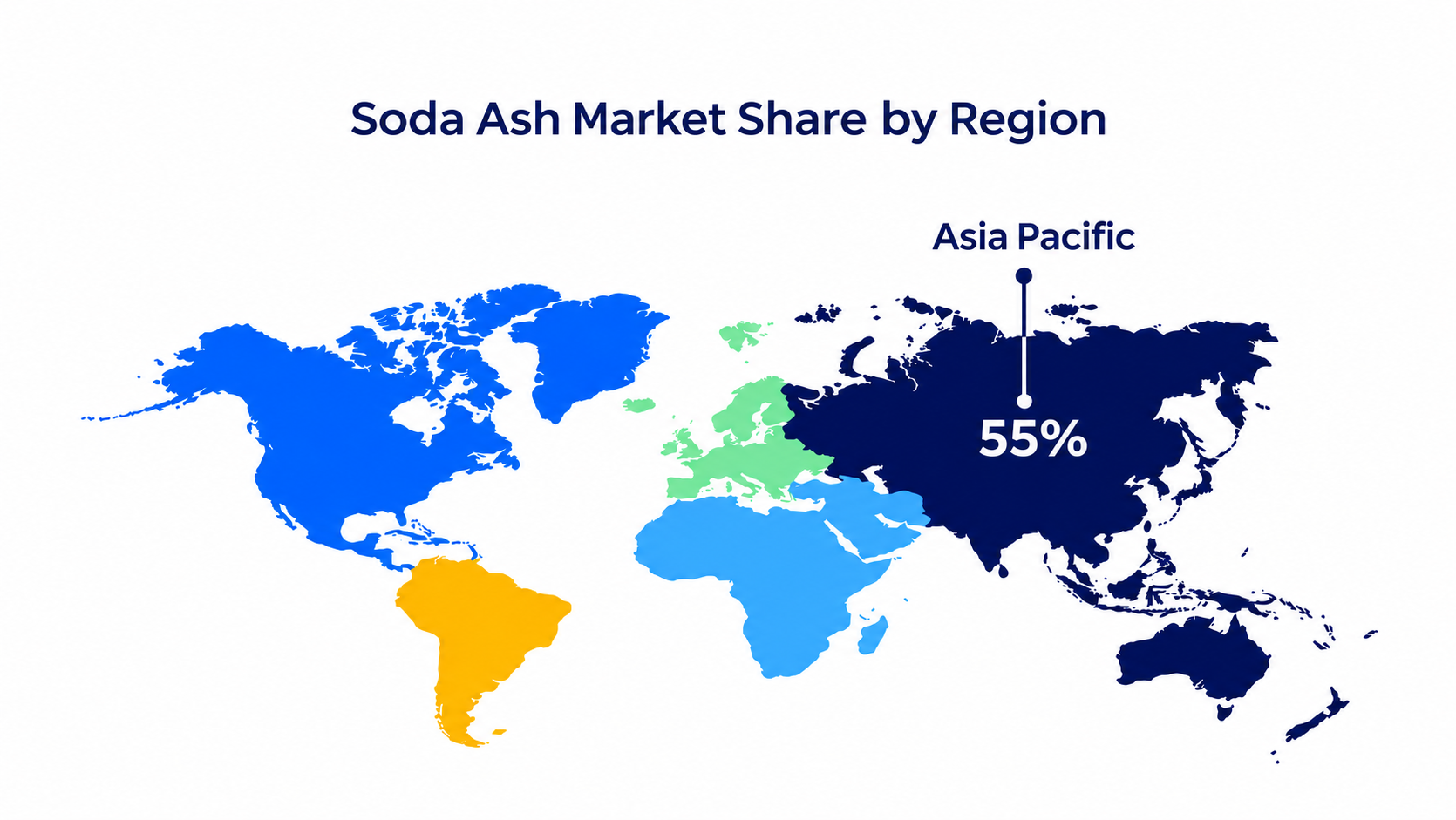
Commercial market research by Precedence Research reported that Asia-Pacific accounted for 55% of the global soda ash market in 2025. The regional market and USGS production figures show why Asia-Pacific is central to both consumption and supply discussions.
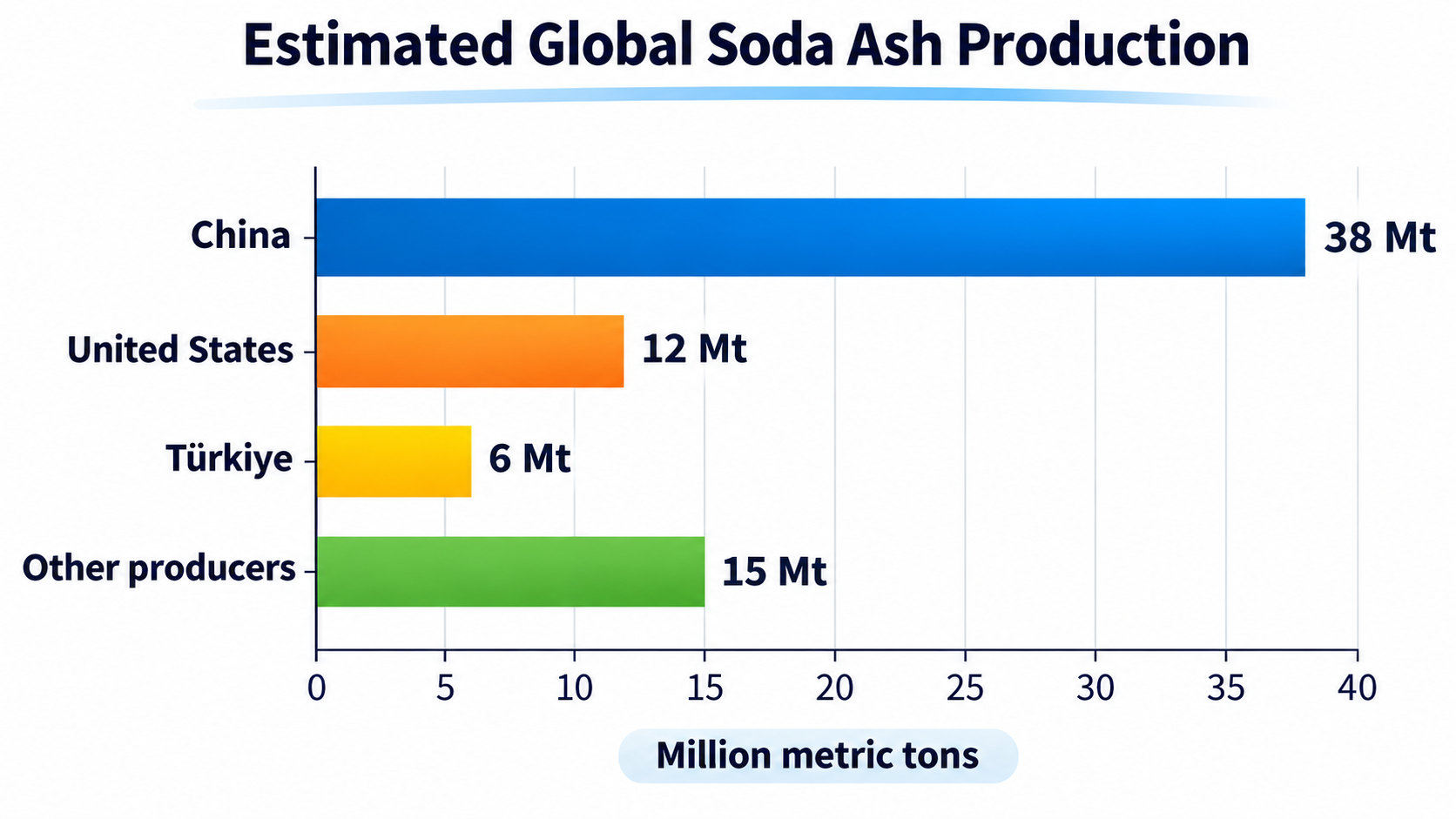
Source: USGS, Mineral Commodity Summaries 2026
▌ China Exports and International Price Signals
China’s natural soda ash expansion in Inner Mongolia added approximately 5 million metric tons of annual capacity in mid-2023, according to USGS. The resulting supply growth has intensified competition with established synthetic production. The relative economics of natural and synthetic routes depend on feedstock, energy, plant utilization and transport.
For international distributors, China offers an important alternative supply base. However, national output is not the same as exportable inventory. Buyers should confirm the actual grade, batch availability, packing and loading schedule for each shipment. Shandong’s established chemical industrial ecosystem provides a relevant sourcing context for these discussions.
▌ Downstream Demand: A Broad Industrial Application Base
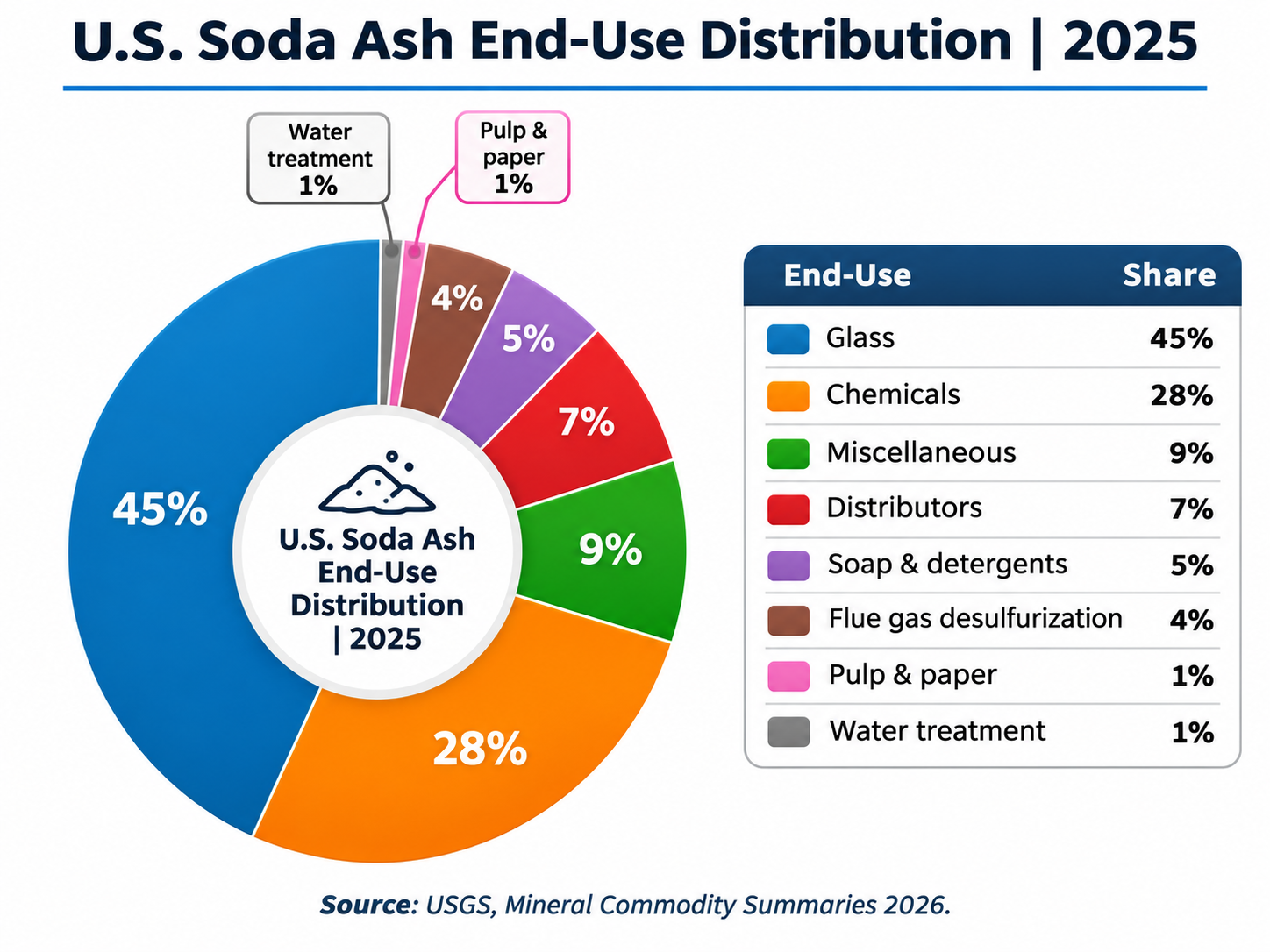
Demand for soda ash is broad, but its distribution varies by country and application. USGS estimates that glass accounted for 45% of U.S. soda ash end use in 2025, followed by chemicals at 28%. Miscellaneous uses represented 9%, distributors 7%, soap and detergents 5%, flue-gas desulfurization 4%, and pulp and paper and water treatment 1% each.
At the global level, Chemical Market Analytics projected that glass production would account for 56% of soda ash consumption in 2026. It also identified solar glass as the fastest-growing glass segment over 2026–2030 and lithium carbonate as the fastest-growing end-use segment over the same period. This points to two different demand horizons: established glass and chemical markets continue to underpin consumption, while energy-transition applications may provide additional growth.
▌ Industrial Applications: Light vs. Dense Soda Ash
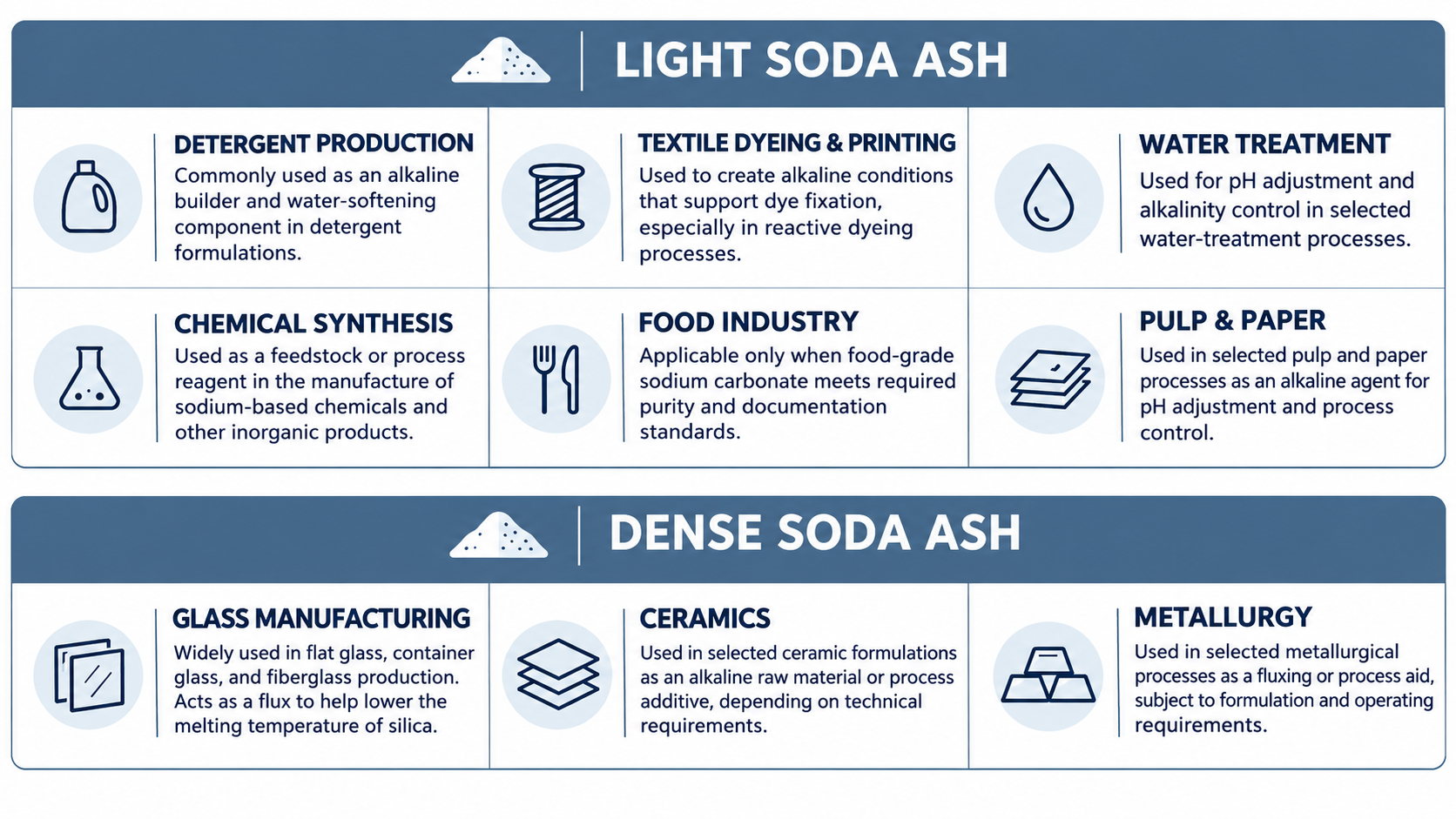
Light and dense soda ash share the same chemical identity — sodium carbonate (Na₂CO₃) — but differ in bulk density, particle size and physical handling characteristics. These differences influence how the material behaves during storage, transportation, feeding, mixing and dissolution, making grade selection an important consideration in industrial processing.
Dense Soda Ash: Glass, Ceramics and Metallurgy
Dense soda ash is widely used as a flux in soda-lime glass production. It is characterized by its relatively coarse, granular particles and higher bulk density. Compared with the finer light grade, its granular structure generates less airborne dust during handling and reduces the risk of particle segregation during transportation and material transfer. These properties make dense soda ash particularly suitable for glass manufacturing, selected ceramic formulations and metallurgical processes. Its lower dust generation and favorable bulk-handling characteristics also support more efficient storage, conveying and automated feeding operations.
Light Soda Ash: Detergents, Textiles and Chemical Processing
Light soda ash has a finer particle structure and lower bulk density. Its relatively small particle size provides a greater surface area per unit mass, which can facilitate wetting, dispersion and dissolution under appropriate processing conditions. These characteristics make it suitable for applications involving powder blending, aqueous preparation and chemical reactions, such as in detergent manufacturing, textile dyeing and printing. In water treatment, it is used to adjust pH, increase alkalinity and support water-softening processes.
Optimizing Soda Ash Selection for Cost-Effective Procurement
To achieve the best balance between product performance and procurement cost, buyers should select soda ash according to their specific applications, production processes and equipment requirements. Key considerations include Na₂CO₃ content, moisture, impurities, bulk density, particle-size distribution and packaging specifications. By matching the appropriate grade to actual operating conditions and evaluating product quality, supply reliability and total delivered cost alongside the quoted price, manufacturers can optimize raw material procurement while maintaining production efficiency and consistency.
▌ What Is Shaping the Soda Ash Market Heading into 2027?
The global soda ash market is approaching 2027 against a backdrop of modest demand growth and continued capacity expansion. On the supply side, capacity adjustments among established producers may partly offset the impact of new capacity. The contrast between limited demand growth and substantial potential capacity additions points to continued competition among producers, particularly where new output exceeds incremental consumption. However, installed production capacity does not automatically become exportable supply. The timing of new plant commissioning, utilization rates and the economics of operating existing facilities will all influence the volume of material actually available to international buyers. These developments suggest that the 2027 market will be shaped not simply by overall production growth, but by the balance between effective operating capacity, regional consumption and international trade flows.
For industrial buyers, China's expanding production base presents opportunities to diversify sourcing and evaluate more competitive supply options. However, greater global availability does not guarantee consistent supply across all grades and destinations. Comparing product specifications, quality consistency, delivery capability and total landed cost will therefore remain essential to securing cost-effective and reliable supply.
▌ Guowei Chemical: A China-Based Partner for Soda Ash Sourcing
China's position as the world's largest soda ash producer makes it an important sourcing market for international buyers. Shandong is an established salt-chemical region, supported by a well-developed industrial network. Located in Weifang Binhai, Shandong, SHANDONG GUOWEI CHEMICAL CO., LTD. serves overseas B2B customers with an inorganic chemical portfolio that includes light and dense soda ash, calcium chloride, caustic soda, sodium bicarbonate and other industrial chemicals.
We aims to provide practical sourcing solutions that balance product suitability, quality assurance and total procurement costs. Whether you are securing raw materials for ongoing production or evaluating alternative suppliers for 2027, we welcome the opportunity to discuss your requirements and develop a supply arrangement aligned with your business needs.