
PVC is a key downstream product in the chlor-alkali industry chain, and fluctuations in its price directly affect the production decisions of chlor-alkali companies. In June 2024, the U.S. PVC market experienced a significant price surge, with export prices rising by approximately $50 per metric ton over two weeks, reaching their highest level since August 2022.
U. S. PVC Price Trends in June
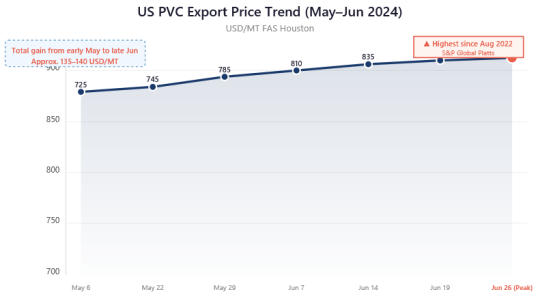
In June 2024, the U.S. PVC export market continued its upward trend that began in late May. According to market data released by Argus on June 14, U.S. PVC export prices rose to $820–850 per metric ton FAS Houston for the week ending June 14. Previously, in late May, Argus had reported that U.S. PVC export prices had increased from $720–730 per metric ton in early May to $770–800 per metric ton, an increase of $60 per metric ton. Prices continued to rise in June, rising by approximately another $50 per metric ton within two weeks.
According to an assessment by S&P Global Commodity Insights (Platts), U.S. PVC FAS Houston prices peaked at $860 per metric ton on June 26, the highest level since August 2022. In the domestic market, U.S. PVC prices also strengthened, with June quotes at approximately 53 cents per pound.
Multiple Factors Behind the Rise in PVC Prices
Orbia’s Altamira Plant in Mexico Halts Production Due to Water Shortage
Orbia’s 690,000-metric-ton-per-year PVC plant in Altamira, Tamaulipas, Mexico, suspended production on May 5 due to water shortages caused by severe drought. On May 21, Vestolit, a subsidiary of Orbia, officially declared force majeure. According to Plastics News, the plant has an annual production capacity of over 1 billion pounds (approximately 450,000 metric tons) of PVC resin. As of June 14, the plant had not yet announced a resumption date.
The facility supplies the Latin American market, and its shutdown has tightened the regional PVC supply situation. Market analysts noted, “Any shutdown of a large PVC complex like Orbia’s Altamira plant will impact global PVC supply and pricing.”
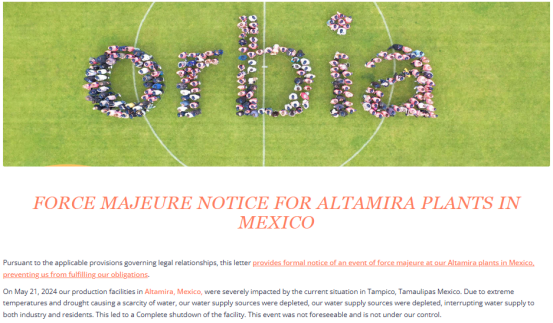
Figure 1.Orbia Vestolit force majeure notice for Altamira PVC plant
Source: © Vestolit / Orbia Polymer Solutions. Available at: www.vestolit.com
Rising Logistics Costs in Asia
According to data from Longzhong Consulting, as of early June, the comprehensive freight rates on major shipping routes from China to India had increased to $130–160 per metric ton, while freight rates from the U.S. to India were only $60–80 per metric ton. The significant freight rate differential has weakened the competitiveness of Chinese PVC exports andopened up space for U.S. exporters in the previously highly competitive Asian market.
U.S. Export Demand and Seasonal Construction Demand
As U.S. PVC producers have increased their operating rates, domestic sales have also increased, further reducing inventories. June marks the peak season for construction activity in North America, and demand for PVC from the downstream construction industry has experienced a seasonal uptick.
Impact on the Chlor-Alkali Industry Chain
PVC is a key downstream product in the chlor-alkali industry chain. Chlor-alkali plants produce chlorine and caustic soda through the electrolysis of brine, and the chlorine can be further used in the production of EDC, VCM, and PVC. In February 2024, Westlake noted that approximately half of the chlorine is used to produce PVC; therefore, PVC is a key driver of chlor-alkali plant utilization rates. The PVC market not only affects PVC producers but also shapes the operation of chlor-alkali plants through its impact on chlorine demand.
Mixed Results for Chlor-Alkali Companies
The impact of rising PVC prices varies significantly among different companies.
Some U.S. producers operate an integrated chlor-alkali, VCM, and PVC production model. Westlake’s Plaquemine facility, for example, houses chlor-alkali, VCM, and PVC production units, with annual production capacities of approximately 940 million pounds of chlorine, 1 billion pounds of caustic soda, 1.6 billion pounds of VCM, and 1.9 billion pounds of PVC. Westlake has benefited from rising PVC prices and increased sales volume. In the second quarter of 2024, the company reported net income of $313 million ($2.40 per share), up from $297 million in the same period last year—a year-over-year increase of 5.4 percent. Second-quarter sales volume rose 12 percent year over year.
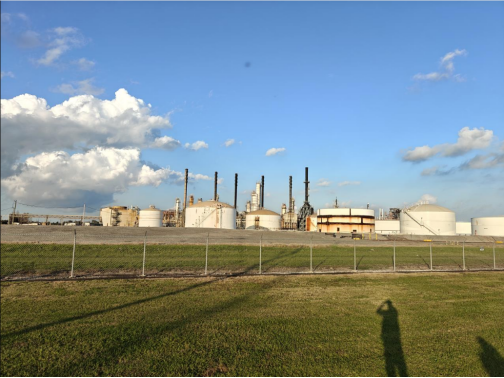
Figure 2. View of the south side of the Westlake Plaquemine plant.
Source: U.S. Environmental Protection Agency (EPA). Available at: response.epa.gov
Olin, however, faces a different situation. As the world’s largest chlor-alkali producer, Olin reported sales of $920.3 million in its Chlor-Alkali and Vinyl Products segment for the second quarter of 2024, down approximately 8.2% from $1,002.3 million in the same period a year earlier. The decline in performance was primarily driven by lower caustic soda prices and maintenance at the VCM unit at the Freeport plant. Net income for the second quarter was $74.2 million, a significant decrease from $146.9 million in the same period last year.
Conclusion
The ripple effect of the June rise in PVC prices on the chlor-alkali industry chain was structural rather than across-the-board. A stronger export market drove up PVC prices and operating rates, but core end markets in the U.S., such as the construction sector, have not shown a fundamental improvement. Chlor-alkali companies’ decisions to increase operating rates depend more on the sustainability of the export market than on a recovery in domestic demand.