
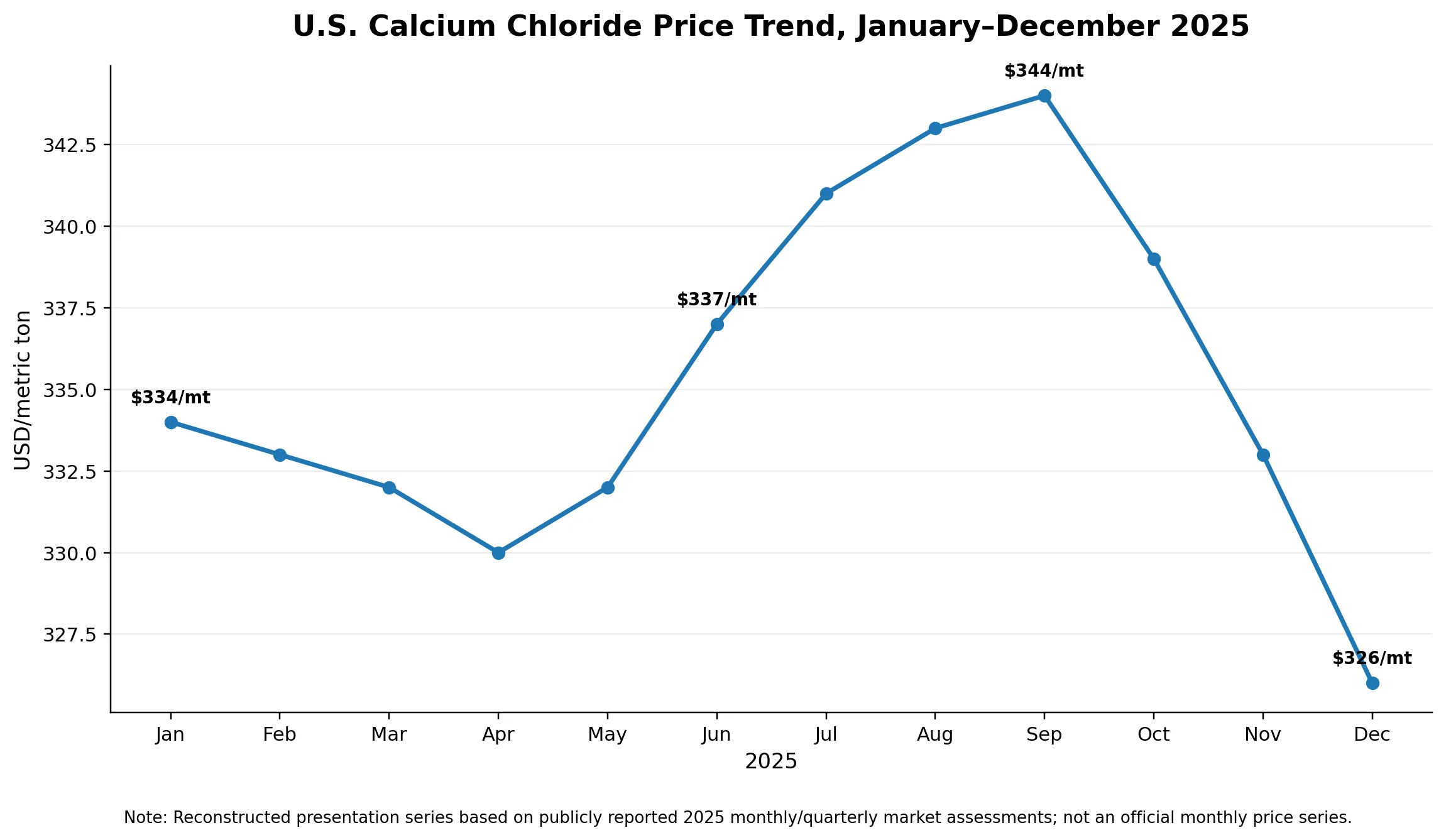
In December 2025, U.S. calcium chloride prices edged lower as market activity slowed from November. According to ChemAnalyst data, prices declined by approximately 0.7% month over month, marking a reversal from the firmer trend seen earlier in the fourth quarter. Seasonal demand from winter de-icing and infrastructure maintenance continued to provide underlying support, but most downstream buyers had completed their winter procurement by the end of November. As a result, December purchasing activity shifted toward inventory replenishment and spot requirements, limiting fresh demand. Meanwhile, improved logistics conditions and easing cost pressures reduced upward price support, contributing to the softer market conditions.
U.S. Calcium Chloride Prices Ease in December
In December 2025, the U.S. calcium chloride market remained broadly stable, although prices edged lower from the beginning of the month as seasonal purchasing activity slowed. The price decline did not reflect a significant deterioration in underlying end-user demand, but rather a shift in procurement patterns following the buildup of winter inventories. With winter de-icing demand remaining an important source of consumption, many retailers, distributors and end users had already secured sufficient inventories ahead of the season, reducing the need for additional purchases in December.
According to ChemAnalyst, U.S. calcium chloride prices declined by approximately 0.7% month over month by the end of December. On a quarterly basis, the U.S. calcium chloride price index averaged approximately $340.33/metric ton in the fourth quarter of 2025, down about 1.16% from the previous quarter. Supply remained generally balanced, while higher inventories and subdued export demand added some downward pressure to spot prices.
Winter De-Icing Demand Provides Seasonal Support
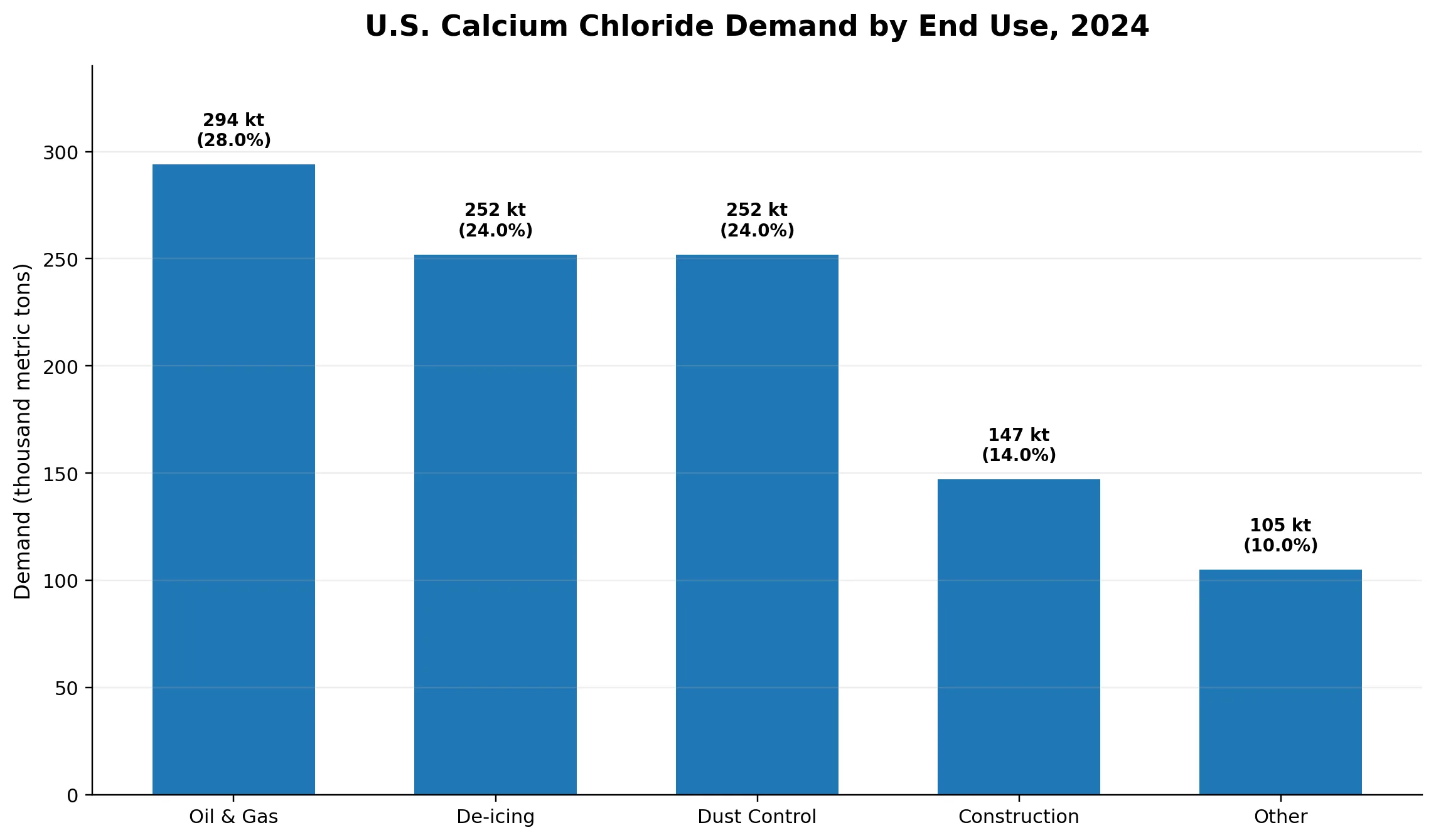
Winter de-icing remains one of the key demand drivers for the U.S. calcium chloride market. With its low freezing point, calcium chloride is widely used for road de-icing, freeze protection and infrastructure maintenance, making purchasing activity particularly sensitive to winter weather conditions in the northern United States and other cold regions.
However, December 2025 market conditions indicated that seasonal demand did not necessarily translate into sustained spot purchasing. Many local governments, retailers and distributors had completed their major winter procurement by the end of November, allowing them to rely on existing inventories to meet near-term requirements in December. Government procurement was also influenced by budget allocations and weather forecasts, with purchasing plans often adjusted in response to actual weather conditions before large-volume orders were placed.
Beyond de-icing applications, calcium chloride has a broad range of uses in the United States, including oil and gas, industrial manufacturing, construction, food processing, water treatment and agriculture. Industrial and energy-related applications provide a relatively stable underlying demand base. In its full-year 2025 results, TETRA Technologies reported continued strong performance in its industrial calcium chloride business, indicating that non-de-icing applications continued to provide support to overall market demand.
Early Winter Procurement and Sufficient Inventories Limit Spot Buying
A key feature of the December market was a more cautious purchasing approach among downstream buyers. Given the strong seasonality of winter demand, some end users typically secure calcium chloride supplies ahead of colder weather, making November an important procurement period. As December progressed, buyers that had already built sufficient inventories had limited incentive to make additional large-volume purchases, resulting in lower spot market activity.
Inventory levels also weighed on price performance. When downstream buyers hold adequate stocks, weaker new-order activity reduces suppliers’ ability to push through price increases. ChemAnalyst reported that rising inventories and subdued export demand contributed to downward pressure on the U.S. calcium chloride price index in the fourth quarter. Meanwhile, producers maintained relatively stable supply, and no significant supply shortages emerged to provide meaningful upward support to prices.
Overall, the December market reflected a combination of sufficient downstream inventories, subdued spot procurement and balanced supply conditions, limiting the potential for a significant price recovery despite continued seasonal demand.
Supply and Logistics Conditions Remain Stable
In addition to demand and inventory conditions, improved logistics also contributed to weaker price momentum in December. Earlier in the fourth quarter, elevated transportation costs had provided some support to calcium chloride prices. By December, however, U.S. freight conditions had become more stable, while improved customs clearance at some ports reduced the risk of shipping delays for chemical products.
More stable logistics conditions eased pressure on the delivered cost of imported calcium chloride and reduced the need for suppliers to factor transportation uncertainties into their offers. According to ChemAnalyst, the normalization of transportation conditions, together with easing cost pressures, limited further upward movement in U.S. calcium chloride prices during December.
Overall, improved logistics reduced one of the cost-side factors that had previously supported prices, reinforcing the downward pressure from sufficient inventories and subdued spot purchasing activity.
U.S. Calcium Chloride Market Outlook Focuses on Winter Weather and Restocking Demand
Overall, the U.S. calcium chloride market in December 2025 was characterized by persistent seasonal demand, slower spot purchasing, relatively ample supply and a modest decline in prices. The weaker price environment primarily reflected changes in procurement cycles and inventory management rather than a significant deterioration in underlying end-user demand.
Looking ahead to early 2026, winter weather will remain a key factor influencing calcium chloride demand. Colder temperatures and increased snowfall could prompt local governments and distributors to replenish inventories, providing some support for prices. Conversely, relatively mild weather could allow existing inventories to cover near-term requirements, limiting the potential for price increases. Market participants will also continue to monitor demand from the industrial and energy sectors, inventory levels, logistics costs and import supply conditions, as these factors could influence the U.S. calcium chloride supply-demand balance and price outlook.
Sources: ChemAnalyst, PriceWatch, USDA Agricultural Marketing Service, TETRA Technologies, OxyChem.