
In November 2025, the U.S. calcium chloride market entered the winter stocking season, with road de-icing demand becoming an increasingly important market driver. Domestic production and imports continued to underpin overall supply, while Chinese export availability, trade costs and international logistics remained relevant to U.S. sourcing decisions.
As winter approached, U.S. buyers increasingly shifted procurement toward seasonal inventory building in preparation for de-icing demand. As a result, developments in China-U.S. trade flows and import economics remained important factors shaping the U.S. calcium chloride market.
Domestic Production and Imports Shape U.S. Supply
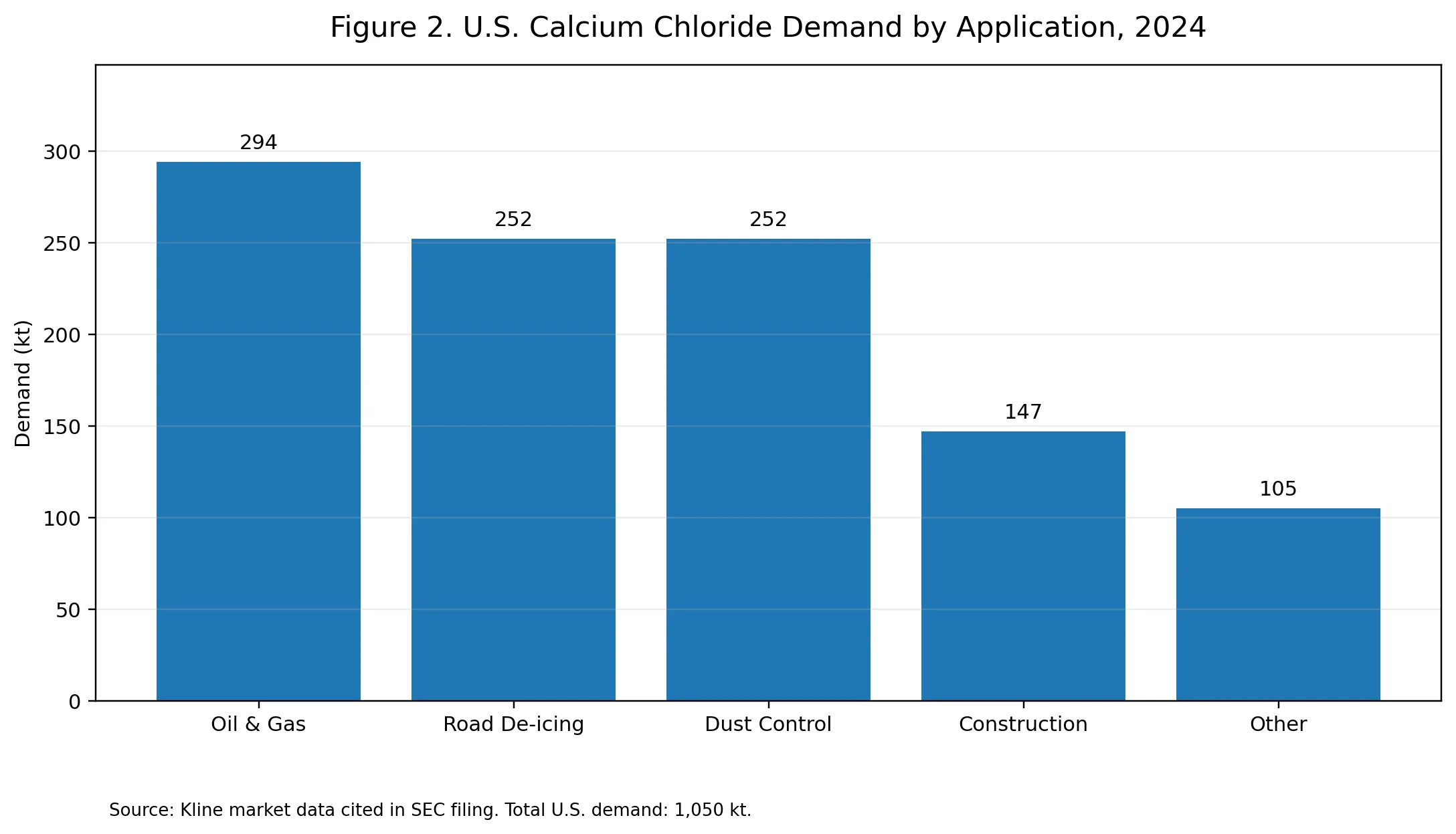
The United States is a major consumer of calcium chloride and remains a net importer. In 2024, U.S. calcium chloride demand was estimated at approximately 1.05 million metric tons. The oil and gas sector accounted for about 294,000 metric tons, while road deicing and dust control each represented approximately 252,000 metric tons. Construction demand was estimated at around 147,000 metric tons.
Road deicing and dust control together accounted for approximately 48% of total U.S. demand, while oil and gas remained the largest single end-use sector. The broad range of applications gives the U.S. market a diversified demand base, with consumption influenced by both seasonal factors and industrial activity.
On the supply side, the U.S. market is supported by domestic production as well as imports from Mexico, China, Canada, Europe and the Middle East. Domestic output and regional supply provide the core market base, while imported material supplements availability and provides sourcing options for different regions and end-use sectors.
China Maintains a Significant Share of U.S. Imports
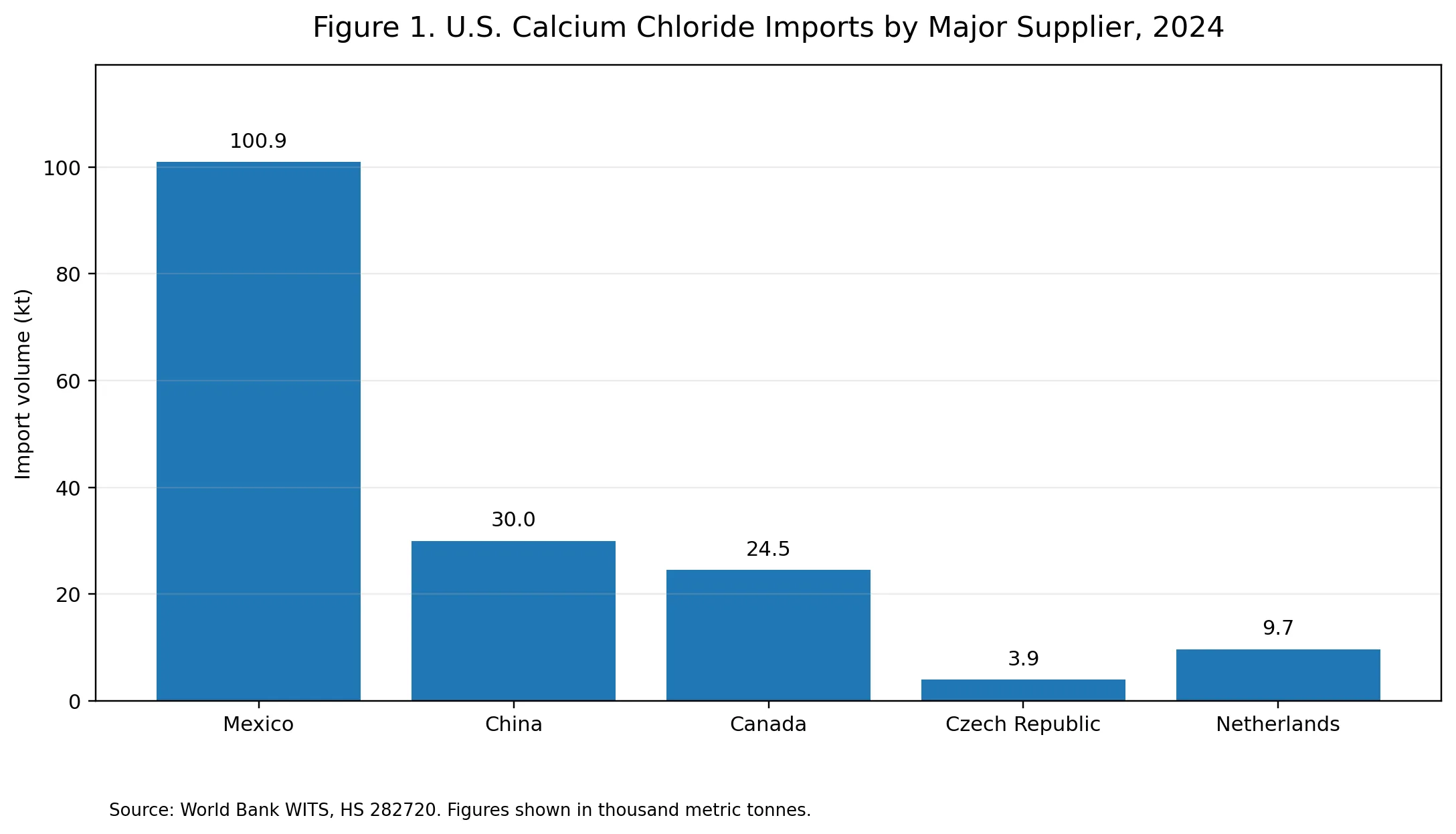
China remained a significant source of calcium chloride imports into the U.S. market in 2024. According to World Bank WITS data, the United States imported approximately 171,800 metric tons of calcium chloride during the year, with about 29,960 metric tons sourced from China. The value of these Chinese imports was approximately $28.35 million, representing about 17.4% of total U.S. calcium chloride import volumes.
Mexico was the largest source of U.S. imports, supplying approximately 100,900 metric tons, while Canada supplied about 24,500 metric tons. Although China ranked behind Mexico in terms of volume, its share of U.S. imports indicates that Chinese material has established a significant trans-Pacific supply channel within the U.S. calcium chloride market.
Chinese Supply Adds Flexibility to the U.S. Market
Trade activity in the first half of 2025 indicates that Chinese calcium chloride suppliers remained active in the U.S. market. Trade data platforms recorded multiple shipments from China to the United States during the period, including standard calcium chloride and 77% calcium chloride flakes, indicating continued availability of Chinese material in the U.S. import market.
For U.S. buyers, Chinese material provides an additional sourcing option alongside domestic production and supplies from Mexico, Canada and other regions. Rather than directly replacing domestic production, imports from China and other overseas origins contribute to a more diversified supply base and provide buyers with greater flexibility in sourcing calcium chloride according to regional demand, product specifications and procurement requirements.
Winter De-icing Demand Supports Seasonal Procurement
November marks the beginning of the U.S. winter demand window for calcium chloride, with road deicing becoming an increasingly important seasonal demand driver. In 2024, road deicing accounted for approximately 252,000 metric tons of U.S. calcium chloride consumption, broadly in line with demand from dust control, while the oil and gas sector accounted for about 294,000 metric tons.
As winter approaches, road maintenance agencies, distributors and industrial users, particularly in northern and northeastern regions, typically begin preparing inventories ahead of periods of increased deicing demand. As a result, November procurement is influenced not only by prevailing weather conditions, but also by weather forecasts, inventory levels, delivery lead times and import costs.
For imported material, the seasonal procurement cycle also requires buyers to account for ocean freight transit times and shipping schedules. Consequently, the availability of Chinese supply, international freight rates and delivery lead times can become relevant factors in sourcing decisions during the winter stocking period.
Trade Conditions Remain a Key Supply Chain Factor
In addition to supply and demand fundamentals, the U.S.-China trade environment remained an external factor for trans-Pacific chemical trade in 2025. Multiple adjustments to U.S.-China trade policies during the year had the potential to affect import costs, procurement decisions and the relative competitiveness of suppliers from different origins.
However, available data do not establish a direct relationship between specific trade policy changes in November 2025 and changes in U.S. calcium chloride import volumes. Trade policy is therefore better viewed as part of the broader macroeconomic and trade environment rather than as a standalone explanation for movements in the calcium chloride market during the month.
Overall, the U.S. calcium chloride market in November 2025 was shaped by the combination of seasonal winter demand and diversified supply sources. Road deicing procurement increased the market's focus on winter inventory planning, while imports from China and other origins remained part of the broader U.S. supply structure. Going forward, market participants will continue to monitor winter weather conditions, road deicing procurement, oil and gas demand, domestic production, import availability and international logistics costs. Changes in U.S. import demand and overseas supply flows will remain important indicators of the market's evolving supply-demand balance.
Sources: World Bank – WITS, U.S. SEC Filings / Market Data, U.S. Geological Survey (USGS).