
In 2025, the calcium chloride market in the Americas showed clear differences in supply, demand, and logistics conditions across regions. Severe winter weather in North America affected regional de-icing demand and the availability of some salt-based products, while shipping conditions on some Asia–Americas routes improved as restrictions on Panama Canal traffic eased. At the same time, Starting on February 4, 2025, an additional 10% U.S. tariff on covered imports from China took effect, increasing the landed cost of Chinese-origin products.
Against this backdrop, calcium chloride procurement in the Americas is shifting from a simple comparison of product prices to a comprehensive assessment of supply chain costs. Actual procurement costs depend not only on the ex-factory price but are also influenced by ocean freight costs, tariff policies, transit times, inventory levels, and supply stability.
Some buyers focus primarily on FOB quotations when selecting a supplier, but the actual landed cost also depends on tariffs, freight, inland transportation, delivery time, inventory requirements, and supply reliability.
Based on the latest market conditions as of February 2025, this article compares domestically produced calcium chloride in the U.S. with imported calcium chloride from China from the perspectives of comprehensive procurement costs and suitability for specific applications, providing a reference for buyers in the Americas to evaluate different supply options.
2025 Calcium Chloride Market Overview in the Americas
In 2025, the calcium chloride market in the Americas was influenced by a combination of supply factors, seasonal demand, and changes in international logistics. Tight domestic supply in the United States pushed up spot prices, while the resumption of traffic through the Panama Canal improved shipping conditions on routes from Asia to the Americas, making imported supplies more competitive. At the same time, regional disparities persisted in the global shipping market, further affecting the cost structures of calcium chloride products from different sources.
Increased Winter Demand in the U.S. Leads to Tight Domestic Calcium Chloride Supply
In February 2025, New York State and the northeastern United States experienced heavy snowfall, leading to a rapid increase in road de-icing demand. Major North American salt producers, such as Cargill’s Cayuga salt mine, prioritized supplying de-icing salt to government agencies, resulting in a significant diversion of raw materials and production capacity intended for industrial calcium chloride products. This led to tight domestic spot inventories of industrial calcium chloride, sustained upward pressure on prices, and significant premiums for spot purchases.
Panama Canal Resumes Operations, Reducing Logistics Costs for Asian Supplies
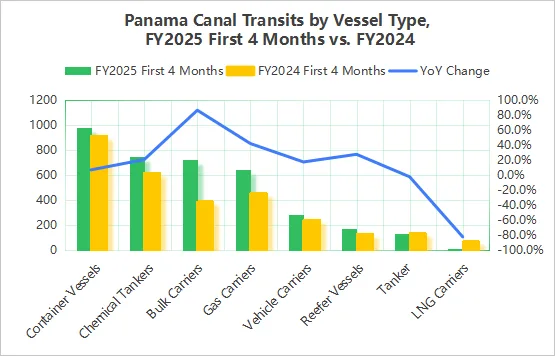
At the same time, logistics conditions for calcium chloride exports from Asia to the Americas improved significantly in early 2025. According to data from the Panama Canal Authority, during the first four months of fiscal year 2025 (October 2024–January 2025), total traffic through the Panama Canal increased by 25.04% year-over-year, with dry bulk carrier traffic surging by 86.15% year-over-year. As the average daily throughput of the Canal recovered to 36 vessels, the issues of vessel queues, load restrictions, and surcharges caused by the drought at the end of 2023 were significantly alleviated, leading to a sharp decline in logistics costs on the route from Asia to the east coast of South America.
Global Shipping Conditions Remain Uneven Across Regions
In 2025, the global shipping market exhibited significant regional divergence. The situation in the Red Sea continued to impact major Asia-Europe routes, driving up fuel, insurance, and rerouting costs on some routes. However, shipping pressure on routes from Asia to the Americas eased somewhat thanks to the resumption of operations at the Panama Canal.
As a result, calcium chloride buyers in the Americas faced different procurement conditions: tighter spot availability in parts of the U.S. market, while some import routes benefited from improved shipping conditions. U.S. suppliers are facing inventory pressure, while Asian suppliers, benefiting from lower transportation costs, have gained stronger price competitiveness in certain markets.
Comparing U.S. Domestic and Imported Calcium Chloride Costs
For buyers evaluating an industrial calcium chloride supplier, the relevant comparison is the total landed cost rather than the FOB quotation alone,which includes factors such as product price, tariffs, ocean freight, domestic transportation, inventory management, and supply stability.
As of early 2025, there remains a significant cost disparity between domestically produced calcium chloride in the U.S. and imported products from China; however, as trade policies and the logistics environment evolve, the competitive advantages of both are shifting.
Product Price: Chinese Suppliers Maintain a Clear Cost Advantage
Chinese calcium chloride producers have historically benefited from large-scale production, integrated chemical supply chains, and relatively competitive raw-material costs. A large number of Chinese calcium chloride producers are integrated into the soda ash and salt chemical industry chains, producing calcium chloride as a byproduct through the combined soda-lime process or the ammonia-soda process. This allows them to share supplies of basic raw materials, such as rock salt and hydrochloric acid, thereby reducing production costs.
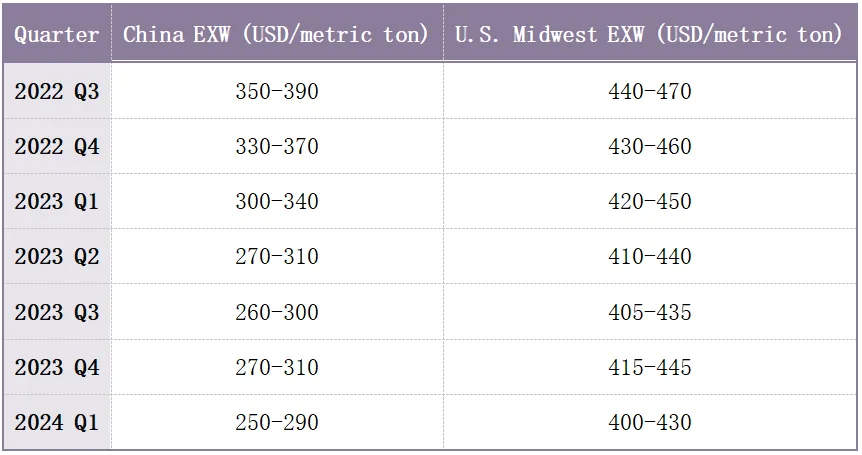
Data shows that from the third quarter of 2022 to the first quarter of 2024, the ex-factory price of desiccant-grade calcium chloride in China was approximately $250–390 per metric ton, while the price of similar products in the U.S. Midwest during the same period was approximately $400–470 per metric ton. Prices from Chinese suppliers were typically about 20%–30% lower than those of North American products.
China’s calcium chloride exports were also priced competitively. In April 2024, the average export value was approximately $175 per metric ton. This pricing structure has helped Chinese calcium chloride manufacturers remain competitive in bulk international markets.
In contrast, calcium chloride production in the United States relies primarily on natural brine resources, and production costs are significantly affected by energy prices. Prices for U.S.-produced calcium chloride vary significantly depending on the application:
De-icing and road maintenance: approximately $240 per metric ton
Construction and industrial applications: approximately $300–350 per metric ton
Oil and gas drilling: approximately $450–550 per metric ton
Food, pharmaceutical, and other high-purity applications : can exceed $600 per metric ton
Therefore, in the standard industrial-grade product sector, Chinese suppliers remain highly price-competitive.
Tariffs Alter the Cost Advantage of Chinese Imports
Although Chinese calcium chloride has a low FOB price, additional trade costs must be considered once it enters the U.S. market. The base MFN tariff for calcium chloride (HS Code 282720) is 0%, but products originating in China are subject to additional trade measures:
Section 301 tariff: 25%
New fentanyl-related tariffs effective in 2025: 20%
Additional tariffs under the IEEPA: 10%
Taken together, Chinese calcium chloride entering the U.S. market may face approximately 55% in additional tariff costs.
Based on an average Chinese export price of $175 per metric ton in 2024:
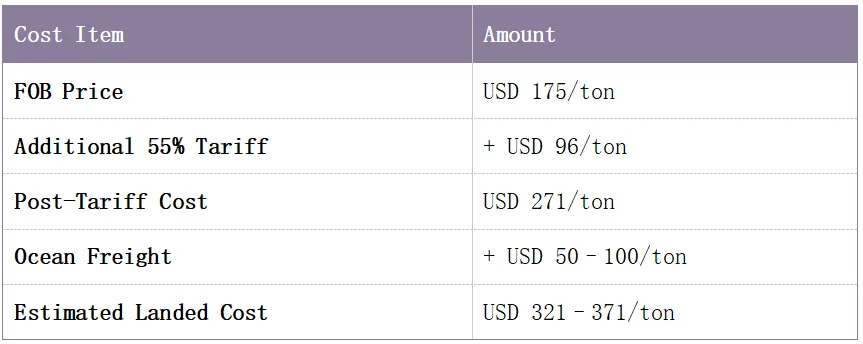
Therefore, when tariffs are taken into account, the price gap between Chinese-imported calcium chloride and domestically produced U.S. products has narrowed significantly.
For U.S. buyers, Chinese suppliers still hold a cost advantage, but this advantage has shifted from "low-price competition" to “comprehensive supply chain competition.”
Logistics Costs Influence Procurement Decisions
Logistics is a major cost component for calcium chloride imports from China into the U.S. market.As of early 2025, the overall ocean freight market from China to the U.S. has stabilized:
Indicative ocean freight for a 40-foot high-cube container from China to the U.S. West Coast are approximately $2,200–$3,000
Freight rates from China to the U.S. East Coast are approximately $3,000–$4,000.
Based on an average of approximately 25 metric tons per container, the unit ocean freight cost is approximately:
West Coast: $88–120 per metric ton
East Coast: $120–160 per metric ton
In contrast, domestic procurement in the U.S. primarily relies on truck or rail transportation, with logistics costs typically ranging from $20 to $50 per metric ton and shorter delivery lead times.
Choosing Between U.S. Domestic and Imported Calcium Chloride
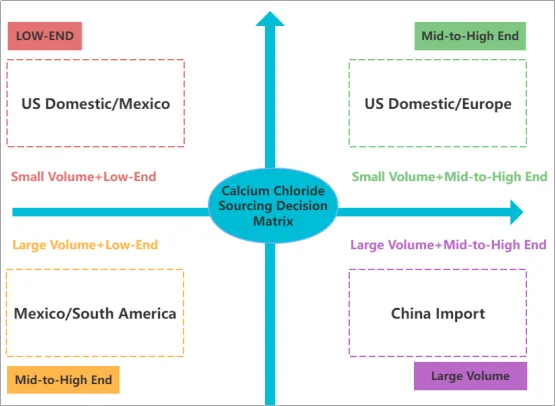
Given the market conditions in February 2025, both domestically sourced calcium chloride in the U.S. and calcium chloride exported from China have their respective advantages. Buyers should select the appropriate supply source based on the destination, supply cycle, procurement volume, and application scenario.
The U.S. Domestic Market
For short-cycle, emergency restocking, and winter de-icing purchases, domestic suppliers typically offer better control over delivery times and inventory risks. There are clear trade barriers to calcium chloride imports from China in this region. Combined with long ocean freight transit times and high overall taxes and fees, these factors undermine the overall cost advantage of Chinese supplies once they arrive. Furthermore, emergency de-icing during the North American winter and short-term restocking for local industries demand extremely tight delivery schedules. Domestic sources can provide rapid delivery and "order-as-you-go" fulfillment, This makes domestic supply more suitable for short-term and emergency purchases.
Long-Term Import Procurement in the U.S.
Chinese suppliers can remain competitive when buyers have stable demand, sufficient inventory planning, and access to cost-effective shipping. However, buyers must factor in tariffs, ocean freight, port fees, and inland transportation costs when calculating total costs, rather than simply comparing FOB quotes. Taking mid-to-high-end applications in oil and gas drilling as an example, if imported from China, the bulk FOB price is $150 per metric ton. After adding a 55% tariff, the price rises to $232.5 per metric ton. Adding $100 for ocean freight, $5 for destination port fees, and $80 for inland transportation, the total cost delivered to the warehouse is approximately $417.5 per metric ton. In contrast, the delivered price for U.S.-sourced oil and gas-grade calcium chloride ranges from approximately $470 to $600 per metric ton, meaning imports from China still hold a cost advantage of 11% to 30%.
East Coast of South America (Brazil, Argentina, Uruguay, Northern Chile)
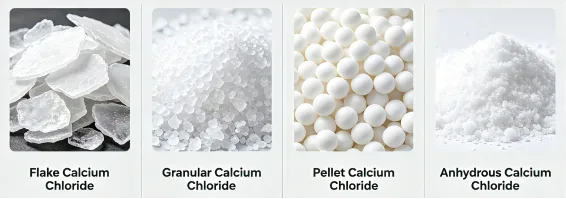
For major South American industrial markets such as Brazil and Argentina—which are not subject to U.S. trade policies toward China—Chinese calcium chloride suppliers typically offer stronger price competitiveness. For buyers in South America, Chinese suppliers may offer competitive landed costs when ocean freight and Panama Canal transit conditions are favourable. Furthermore, China possesses a well-developed salt chemical industry chain, with large-scale calcium chloride production capacity. They can provide a variety of product specifications—including flake, granular, pellet, and anhydrous calcium chloride—to meet the needs of different industries. These products are suitable for diverse industrial applications, such as windshield washer fluid treatment in Brazil, dust suppression in Argentine oil fields, and concrete processing for infrastructure projects across South America, This makes Chinese supply more suitable for planned bulk purchases and longer-term contracts when buyers can forecast demand in advance.
Conclusion
In 2025, the calcium chloride market in the Americas showed significant differences between domestic U.S. supply and imports from China. U.S. suppliers offered shorter lead times and lower logistics risk, while Chinese suppliers remained competitive in product pricing and production scale.
In low-end applications such as de-icing and dust control, the 55% additional tariff has already pushed the delivered-to-warehouse cost of Chinese imports above that of U.S. domestic products, making domestic or Mexican supplies more competitive overall. In mid- to high-end applications such as oil and gas drilling, Chinese imports still retain a cost advantage of approximately 11%–30%, provided that annual procurement volumes are large, demand is stable, and inventory can be arranged in advance. In the South American East Coast market, Chinese products are not subject to U.S. tariffs on Chinese goods. Combined with the logistical benefits of the Panama Canal, the landed cost for large volumes is significantly lower than that of U.S. domestic sources, making them particularly suitable for annual long-term contract procurement.
For buyers evaluating a calcium chloride supplier, the most useful comparison is the total landed cost, including product price, tariffs, freight, inland transportation, inventory requirements, and delivery reliability.