
Seasonal Cycles in the U.S. Calcium Chloride Market
Why Do Calcium Chloride Prices Rise in the Fall and Winter?
In the U.S. and Canadian markets, demand for calcium chloride follows a distinct seasonal cycle, resulting in significant disparities in supply and prices between the off-season (Q2) and peak seasons (Q3, Q4). At the beginning of the year, winter demand continues to support the market; however, as the second quarter begins and de-icing demand in North America gradually subsides, price pressure eases. In the second half of the year, prices typically come under upward pressure as winter stocking begins. In December 2023, U.S. calcium chloride market prices temporarily declined due to ample inventory and reduced inquiries from downstream buyers, but rebounded in January 2024 as winter de-icing demand increased.
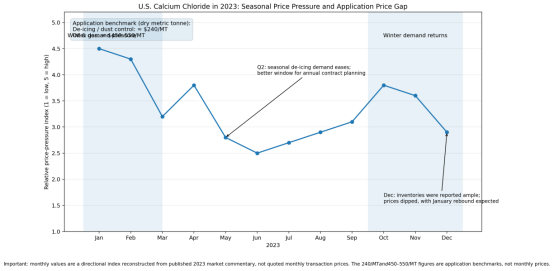
Figure 1.U.S. Calcium Chloride in 2023:Seasonal Price Pressure and Application Price Gap
There is a distinct price gradient among calcium chloride products of different application grades.
From an application perspective, there remains a significant price gradient in the U.S. calcium chloride market. According to publicly available industry data, prices for snow and ice removal and dust suppression applications are approximately $240/MT, while prices for oil and gas applications range from $450 to $550/MT. This means that oilfield buyers are not dealing with a simple “bulk calcium chloride price,” but rather with a specialized market closely tied to product grades, application requirements, and supply stability. The price difference between the two primarily stems from control requirements such as purity, impurity levels, and purchase volume. The price of oilfield-grade anhydrous calcium chloride (94%+) is significantly higher than that of standard de-icing-grade dihydrate calcium chloride (72–77%).
Table 1. 2023 U.S. Calcium Chloride Price Comparison: Dihydrate Calcium Chloride vs Anhydrous Calcium Chloride
Oilfield Procurement Shouldn’t Be Based Solely on Price: What’s the Difference Between Dihydrate Calcium Chloride and Anhydrous Calcium Chloride?
Calcium Chloride Dihydrate: Suitable for Snow Melting and General Industrial Applications
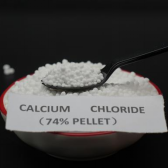
Calcium chloride dihydrate (purity 72%–77%) is a general-purpose industrial-grade product designed specifically for seasonal civilian and basic industrial applications. It is primarily valued for its de-icing performance, cost efficiency, and availability in large volumes;it does not have stringent requirements for impurity control or chemical stability.
Calcium chloride dihydrate is primarily used for snow and ice removal on roads, dust suppression at construction sites, and seasonal road maintenance. The product is permitted to contain certain levels of magnesium salts, insoluble residues, and various impurities; while these impurities do not cause adverse effects in outdoor consumer applications, they are not suitable for use in downhole drilling fluid systems.
Anhydrous Calcium Chloride: Why Is It Better Suited for Oil and Gas Applications?
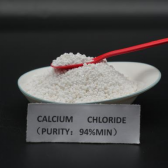
Anhydrous calcium chloride (90%–94% purity) requires extremely low impurity levels, stable chemical composition, and excellent batch-to-batch consistency. It is also compatible with various drilling polymers and exhibits stable performance under high-temperature resistance, meeting the stringent operational standards of oil and gas drilling and completion fluid systems.
Table2. Specifications and Parameters
Four Types of Risks That May Arise from Incorrect Product Selection
Some U.S. oilfield buyers fell into a common cost-cutting trap in the second quarter: continuing to use de-icing-grade calcium chloride as a substitute for anhydrous calcium chloride after the winter snow-melt season. Although the purchase price is lower in the short term, this substitution may pose serious production risks due to significant differences between the two in terms of purity, impurity control, and application performance.
When high-impurity dihydrate calcium chloride is mistakenly used in oilfield drilling fluid systems, excess foreign ions and insoluble impurities can cause a series of adverse effects on downhole operations:
• Disruption of the mud rheological system, leading to a decline in drilling fluid performance;
• Adverse reactions with other chemical additives, leading to flocculation, viscosity instability, and abnormal gel strength;
• Inducing hydration swelling in shale formations, wellbore spalling, stuck pipe, and rheological imbalance;
• Impurities precipitating and forming scale that clogs the circulation system, reducing drilling efficiency.
For oil and gas companies, selecting the right calcium chloride is by no means a simple matter of comparing prices; rather, it is a critical factor directly affecting drilling safety, production continuity, and operational cost control. Dihydrate calcium chloride is suitable for commercial and general industrial applications such as snow melting and dust suppression, where tolerance for impurities is high and performance requirements are low; in contrast, anhydrous oilfield-grade calcium chloride is better suited to the demanding conditions encountered in downhole operations.Misusing lower-grade substitute materials may seem like a way to save on procurement costs, but it ultimately leads to downhole failures, work stoppages, rework, and equipment wear and tear, resulting in massive economic losses far exceeding the price difference between the materials.
Q2 2024: Why Now Is the Best Time to Secure a Long-Term Supply of Calcium Chloride
Analysis of Calcium Chloride Market Fundamentals for Q2 2024
In the first quarter of 2024, due to above-average temperatures in the United States, there was no significant snowfall in the northern regions. This resulted in relatively high overall calcium chloride inventory levels, putting downward pressure on prices; however, the fundamentals of the U.S. calcium chloride market remained stable and positive. Demand from the downstream construction and food industries remained robust, while rising prices for the raw material soda ash drove up production costs. Domestic U.S. plants operated at full capacity with stable production, maintaining ample inventory and consistent delivery capabilities.
Q3/Q4: What changes will oilfield buyers face?
Entering the third and fourth quarters, as municipal authorities and road maintenance contractors build inventory for the winter, demand for calcium chloride will surge sharply, leading to soaring prices, spot market shortages, and shipping delays. The second quarter of 2024 provides ample time to complete supplier screening, specification confirmation, contract negotiations, volume commitments, and logistics arrangements. This also creates the best window of the year for oilfield operators, construction companies, and other industrial buyers to build inventory.
How Should Oilfield Buyers Develop Their 2024 Calcium Chloride Procurement Plans?
Supplier Screening in Q2
·During the off-season in Q2, market supply is relatively abundant, giving buyers ample time to conduct qualification reviews and sample testing of potential suppliers. It is recommended to evaluate suppliers based on at least the following criteria:
• Whether the supplier has stable production capacity for oilfield-grade anhydrous calcium chloride
• Whether the supplier can provide complete Certificates of Analysis (COAs) and batch traceability records·
• Whether there is a history of quality disputes caused by impurity issues·
• Whether they have the capacity to maintain stable deliveries during the peak season in Q3–Q4
Lock in Base Purchase Volumes in Advance
When prices are typically more favorable in Q2, locking in agreed-upon quantities and price ranges through annual or semi-annual framework agreements is the most effective way to control procurement costs. It is recommended to lock in 60%–70% of the estimated annual demand, while retaining flexibility for the remainder to accommodate fluctuations in operational volume.
Specify Product Grades and Quality Metrics
·The following technical specifications must be clearly stated in the procurement contract to prevent de-icing-grade material from entering the oilfield supply chain:·
·• Product Name: Anhydrous Calcium Chloride·
• CaCl₂ Content: ≥94%·
·• Water-Insoluble Matter: ≤0.1%·
·• Limits on Other Impurities: Compliant with industry standards
• A complete set of official export documents (COA, MSDS) can be provided.
FAQ: Frequently Asked Questions from U.S. Oilfield Buyers Regarding Calcium Chloride Procurement
Q1. How much calcium chloride should an oilfield buyer secure for the winter season?
The required volume should be based on historical monthly consumption, project plans, lead times, and safety stock rather than simply purchasing the entire year's demand in a single order.
Q2. What documents should I request from a calcium chloride supplier?
• COA
• SDS
• Product specification sheet
• Batch test results
• Packaging specifications
• Certificate of origin
• Relevant quality/compliance documentation
Q3. How can I verify whether a calcium chloride supplier is suitable for oilfield use?
Buyers should evaluate product specifications, impurity control, batch-to-batch consistency, quality documentation, production capacity, export experience, delivery capability, and sample-test results.
Q4. Should oilfield buyers purchase calcium chloride on a spot basis or under a long-term contract?
For oilfield customers with stable demand, long-term contracts can help secure a baseline supply while mitigating the risks associated with winter spot market volatility; however, the specific contract structure should be determined based on demand forecasts and storage capacity.
Q5. How early should imported calcium chloride be ordered for U.S. oilfield operations?
Q2 is a practical window to secure supply for the second half of the year, allowing enough time for production, shipping and inland delivery before the winter demand peak.
Q6. What should buyers consider when importing calcium chloride from China?
• product grade
• purity
• impurity profile
• packaging
• container loading
• shipping schedule
• port of destination
• COA/SDS
• supplier production capacity
• long-term supply capability