
FOB Export Prices for Soda Ash Continue to Fall, Approaching Historic Lows
Recently, spot prices for heavy soda ash in Shahe, China, have fallen below RMB 1,000 per metric ton, with market prices reaching approximately RMB 972 per metric ton. China's soda ash export market is also showing a clear trend of rising volumes amid falling prices. According to customs data, the average FOB export price has continued to decline, bringing prices close to their lowest levels in more than two decades. The soda ash price trend in 2026 reflects growing export volumes amid weakening prices in the Chinese domestic market, creating new purchasing opportunities for overseas buyers.
China's Monthly Soda Ash Export Prices and Volumes
(June–September 2026)
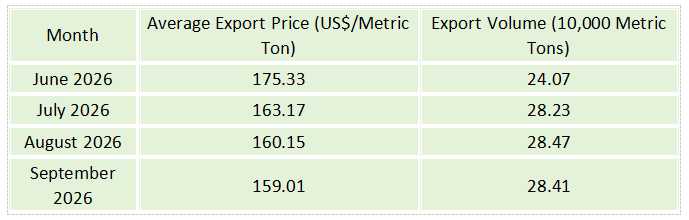
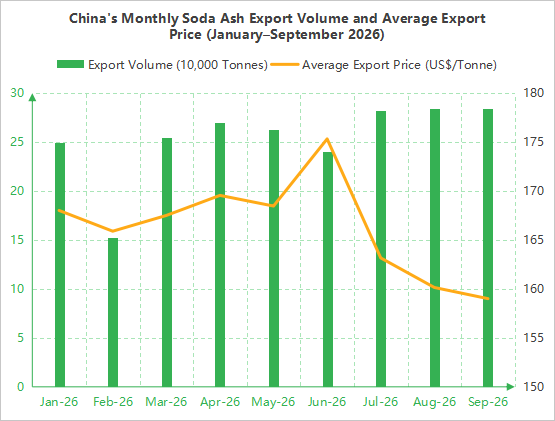
Between June and September 2026, the China soda ash export price fell by approximately 9.3%, while monthly export volumes increased overall and remained above 280,000 metric tons. From January through September, China's cumulative soda ash exports reached 2.2813 million metric tons, up approximately 46% year over year.
For international buyers comparing the soda ash price per MT in China, the latest export data provides a useful benchmark. In September 2026, China's average FOB export price stood at US$159.01 per metric ton, approaching the historical low of US$152.26 per metric ton recorded in January 2005. This puts China's soda ash export prices close to their lowest levels in more than two decades.
China Soda Ash FOB Price Trend: June–September 2026
Several supply-side and demand-side factors suggest that further significant price declines may be limited:
1. Mounting Losses Among Domestic Producers: As of mid-October 2026, the estimated theoretical loss was approximately RMB 171.50 per metric ton for producers using the combined alkali process and RMB 179.50 per metric ton for those using the ammonia-soda process. Together, these two production methods account for nearly 80% of China's domestic soda ash capacity, with producers facing mounting losses. Natural soda ash producers are also earning little to no profit. These conditions may limit further price declines, as sustained losses could eventually prompt producers to cut output or suspend operations.
2. Producer Inventories Are Declining: By the end of October 2026, inventories held by domestic soda ash producers had fallen to 1.3689 million metric tons, down 390,400 metric tons, or 22.19%, from the previous month. A wave of scheduled maintenance shutdowns in October also reduced production by 3.95% month over month, contributing to the decline in inventories.
3. Downstream Demand Shows Signs of Stability: As of late October 2026, China's float glass industry had an operating rate of 66.89%, while daily melting capacity stood at 143,200 metric tons. Both indicators remained unchanged from the previous week.
4. International supply uncertainties: Major producers such as Tata Chemicals have announced plans to increase soda ash prices. Meanwhile, potential changes to Kenya's natural soda ash export policies could affect global supply availability. These developments may improve the competitive position of Chinese synthetic soda ash in international markets.
Key Factors Affecting CIF and Landed Costs
1. Higher Ocean Freight Surcharges: Starting in November 2026, several major shipping carriers have introduced or adjusted surcharges on routes from Asia to Australia, New Zealand, and other destinations. For example, Maersk's peak-season surcharge for a 40-foot dry container on certain Asia–Australia routes has reached US$1,000. The actual surcharge varies by destination, container type, and booking terms. For buyers comparing FOB and CIF quotations, obtaining updated freight rates is essential to calculating the total landed cost.
2. Regional Anti-Dumping Duties: Buyers importing soda ash into Pakistan should account for the country's trade measures. On August 15, 2026, Pakistan's National Tariff Commission imposed a provisional anti-dumping duty of 10.85% on soda ash originating in or exported from China. The measure applies for four months from the date of publication, with a final determination expected within 180 days of the preliminary ruling.
This additional duty increases the import cost for Pakistani buyers. Exporters should inform customers of the applicable anti-dumping duty when preparing quotations and clarify that the importer is responsible for any applicable duties payable to Pakistani customs. Buyers should also confirm the latest duty status and applicable exemptions before placing orders.
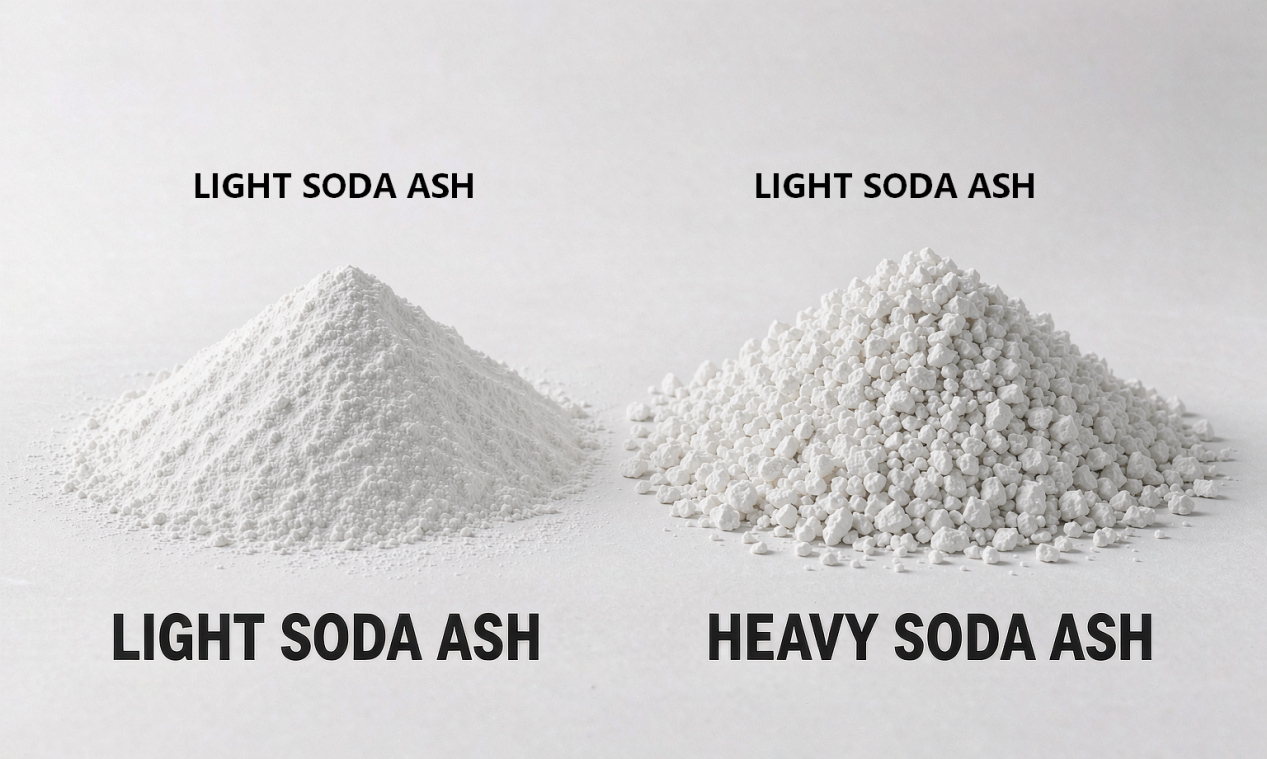
3. Packaging and Loading Capacity: Standard solid soda ash is shipped as general cargo. A 20-foot container can hold approximately 26 metric tons of heavy soda ash, while the capacity for light soda ash is limited to approximately 18–20 metric tons due to bulk density constraints. Given the high-temperature and high-humidity climate in Southeast Asia, it is essential to ensure that light soda ash is properly protected with moisture-proof liners and desiccants.
Export Compliance and Certificate of Origin Policies
China's soda ash exports under HS code 2836200000 are generally eligible for a 13% export VAT rebate and are subject to zero export duty, subject to applicable customs regulations. Soda ash is generally not classified as dangerous goods for sea transport. However, exporters should verify the product's SDS, shipping requirements, and any applicable export control or customs supervision requirements before shipment.
For buyers in Southeast Asia and other RCEP member markets, importing soda ash from China may offer tariff advantages under applicable free trade agreements. Depending on the destination country, HS code classification, and applicable rules of origin, Chinese soda ash may qualify for preferential import duty rates under the ASEAN-China Free Trade Area (ACFTA) or the Regional Comprehensive Economic Partnership (RCEP).
To claim these benefits, exporters can apply for a Certificate of Origin under the relevant agreement. Form E is used under the ASEAN-China Free Trade Agreement, while the RCEP agreement uses an RCEP Certificate of Origin (CO Form RCEP). Importers should check the applicable tariff schedule and rules of origin for their destination market before shipment. When the product meets the relevant requirements, preferential tariffs can help reduce overall import costs.
Procurement Recommendations
Currently, China’s FOB export prices for soda ash are at historic lows. For buyers planning to stock up from Q4 through Q1 of next year, we recommend locking in prices in batches to avoid missing the procurement window by waiting for minor price drops.
Customer Questions & FAQ
Common questions from international chemical buyers.
1What is the difference between FOB and CIF prices when importing soda ash from China?
FOB prices cover the cost of the goods and delivery onto the vessel at the agreed loading port, while CIF prices include the cost of goods, marine freight, and insurance to the named destination port. Buyers comparing Chinese soda ash quotations should also consider import duties, port charges, customs clearance fees, and inland transportation when calculating the total landed cost.
2Is Q4 2026 a good time to purchase soda ash from China?
The relatively low FOB export price of approximately US$159/MT in September 2026 may offer a purchasing opportunity for overseas buyers. However, prices could be affected by producer operating rates, inventory changes, ocean freight, and international trade policies. For buyers planning Q4 2026 and Q1 2027 procurement, staggered purchasing can help balance price risks and avoid relying on a single market entry point.
3What is the difference between dense soda ash and light soda ash, and which one should I import?
Dense and light soda ash have the same chemical composition (Na₂CO₃), but differ in bulk density, particle characteristics, and handling properties. Dense soda ash is commonly used in glass manufacturing because its higher bulk density makes storage and transportation more efficient. Light soda ash is widely used in detergents, chemicals, and other industrial applications. Buyers should select the grade according to their production process and handling requirements rather than price alone.
4How do I calculate the actual landed cost of soda ash imported from China?
The landed cost includes more than the FOB or CIF quotation. Buyers should account for ocean freight, marine insurance, import duties, anti-dumping duties where applicable, port handling charges, customs clearance, and inland transportation. Comparing the total cost per metric ton at the final destination provides a more accurate basis for evaluating suppliers and purchasing options.
5How can I prevent soda ash from absorbing moisture during long-distance shipping?
Soda ash should be stored and transported in dry, well-sealed packaging to minimize exposure to moisture. For sea shipments, buyers should check container conditions before loading and use suitable moisture-resistant inner liners and desiccants where necessary. This is particularly important for shipments to tropical markets, where high humidity can cause caking and handling difficulties.