
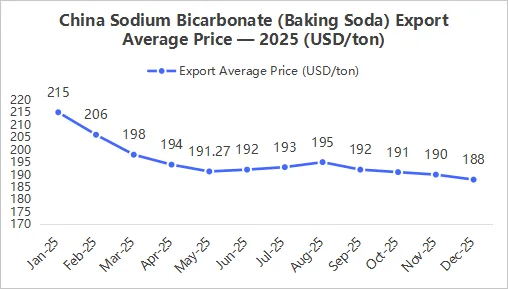
In 2025, China’s sodium bicarbonate export prices declined to approximately $188 per metric ton, the lowest level in recent years. Meanwhile, sodium bicarbonate imports in Latin America and the Caribbean increased by 27% in 2024 to 209,000 metric tons, while regional production declined to 379,000 metric tons. The combination of lower export prices and growing import demand provides Americas buyers with an opportunity to reassess sourcing strategies and procurement costs.
China Sodium Bicarbonate Export Prices Continue to Decline, entering a lower price range in December
In 2025, the average price of China’s sodium bicarbonate exports showed an overall downward trend. The average export price decreased from approximately $215 per metric ton in the first quarter to around $188 per metric ton in the fourth quarter, representing a decline of approximately 12.6%. In December 2025, China’s sodium bicarbonate export volume reached approximately 115,000 metric tons, an increase of 28.98% year over year, indicating that international demand remained active despite lower pricing conditions.
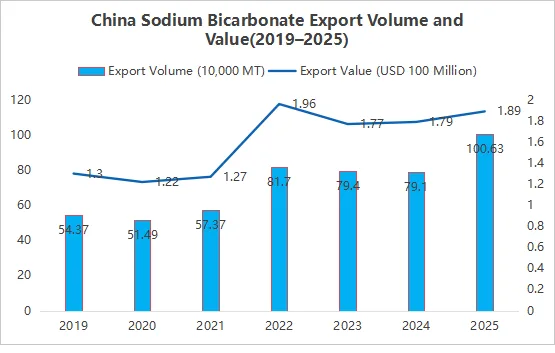
The decline in sodium bicarbonate prices was mainly driven by lower raw material costs and stronger competition among suppliers. Soda ash is the primary raw material used in sodium bicarbonate production. In 2025, China’s soda ash prices declined significantly, reducing cost pressure for sodium bicarbonate producers. China’s domestic soda ash average price decreased from approximately RMB 1,528 per metric ton at the beginning of 2025 to around RMB 1,250 per metric ton by year-end, representing an annual decline of 18.19%. Meanwhile, China’s sodium bicarbonate export market continued expanding. In 2025, China exported approximately 1.006 million metric tons of sodium bicarbonate, with export value reaching approximately $189 million. Compared with 2019,the export volume increased by approximately 85%; the export value increased by approximately 45%. The continued growth of China sodium bicarbonate export volumes highlights the country’s increasing role in the global sodium bicarbonate supply chain.
Although export prices declined throughout 2025, the domestic sodium bicarbonate market showed early signs of stabilization toward the end of the year.
At the end of December, food-grade sodium bicarbonate ex-factory prices were approximately:
$150–167 per metric ton in Henan;
$160–174 per metric ton in Shandong.
During the final week of December, the average domestic market price remained around $165 per metric ton, showing limited further decline compared with the previous week.
Growing Sodium Bicarbonate Imports in the Americas Create New Sourcing Opportunities For Chinese Supplies
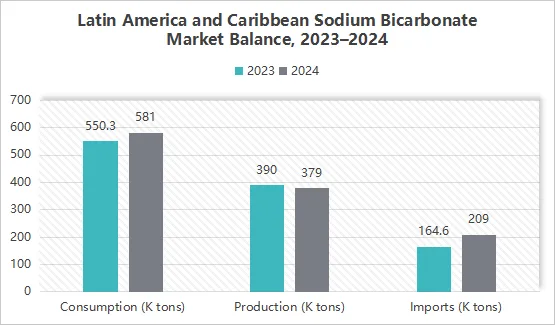
While China’s sodium bicarbonate export prices have declined, demand in the Americas continues to expand.According to data released by IndexBox in November 2025, the Latin American and Caribbean sodium bicarbonate market reached a consumption volume of 581,000 metric tons in 2024, representing the third consecutive year of growth, with a year-over-year increase of 5.6%. Brazil accounted for approximately 75% of regional consumption, making it the largest sodium bicarbonate market in Latin America. At the same time, regional production declined to 379,000 metric tons in 2024, while demand continued to increase. As a result, imports have become an increasingly important source of supply. In 2024, sodium bicarbonate imports in Latin America and the Caribbean reached 209,000 metric tons, up 27% year over year. Brazil and Mexico were among the major import markets. This structural gap indicates that buyers in the Americas are becoming increasingly reliant on sodium bicarbonate imports.
Sodium Bicarbonate Price Outlook for 2026: Stability or Recovery?
The future direction of China’s sodium bicarbonate price will mainly depend on two factors:
1.Demand recovery;
2.The pace at which new production capacity comes online.
First Quarter of 2026: Prices May Remain in a Lower Range
Domestic prices have shown signs of stabilization, with the average price in the last week of December no longer declining. However, the period around the Spring Festival is traditionally a slow season for demand, and export prices are expected to fluctuate at low levels within the range of $180–195 per metric ton.
Second Quarter of 2026: Buyers Should Monitor Demand Recovery
This is the most critical window to watch. In the second quarter of 2026, the market will need to monitor the recovery of sodium bicarbonate demand. A rebound in demand from the food, pharmaceutical, and feed industries, coupled with stabilizing soda ash costs, may drive Chinese sodium bicarbonate export prices to gradually rise to the $195–210 per metric ton range.
Second Half of 2026: New Capacity Will Influence Market Balance
The release of new sodium bicarbonate production capacity in China will determine the upside potential for prices. In the second half of 2026, the focus of the sodium bicarbonate market will shift to the actual pace of new capacity coming online. If 1.6 million metric tons of new capacity is released all at once, the price rebound may be suppressed; if the deployment progresses slower than expected, there will be greater room for prices to rise.
The current export price range is estimated at around $180–190 per metric ton
The current average export price of approximately $188 per metric ton is already close to the marginal cost range for Chinese sodium bicarbonate producers. Based on the domestic average price of 1,190 yuan per metric ton, plus packaging, inland transportation, and port fees associated with exports, there is limited room for export quotes to continue falling significantly. However, given that approximately 1.6 million metric tons of new sodium bicarbonate capacity is still scheduled to come online in 2026, supply-side pressure will persist, and prices may remain within the lower price range for some time.
How Can Americas Buyers Optimize Sodium Bicarbonate Procurement?
For buyers in Brazil and Mexico: Current Chinese sodium bicarbonate export prices are at their lowest levels in recent years. Buyers can assess their 2026 procurement plans based on their own inventory cycles. This period may provide an opportunity for buyers to evaluate forward purchasing options,and secure partial supply agreements with Chinese suppliers. Focus particularly on food-grade and pharmaceutical-grade sodium bicarbonate, as import prices for these two categories in the Latin American market are significantly higher than those for industrial-grade products, and Chinese suppliers hold a clear advantage in the export capacity of food-grade products.
For buyers in Argentina, Chile, and Peru: While sodium bicarbonate import volumes in these markets are smaller than those in Brazil and Mexico, they still hold growth potential. It is recommended to first place small-volume orders to assess logistics costs and delivery reliability before deciding whether to establish long-term supply relationships. Pacific-coast countries such as Chile and Peru enjoy better logistics conditions than Atlantic-coast nations; shipping times from major Chinese ports are relatively shorter, resulting in more competitive landed costs.