
In March 2026, the U.S. caustic soda market saw a temporary price increase, with prices rising by approximately 3.7% by mid-month from the previous assessment period. The move was primarily attributed to supply disruptions in the Middle East, higher international energy and logistics costs, and increased uncertainty across global supply chains. However, U.S. domestic production and inventories remained broadly stable, while downstream purchasing activity stayed cautious. As a result, the price increase was driven more by external supply and cost factors than by a significant tightening of the domestic U.S. supply-demand balance.
U.S. Caustic Soda Prices Rise in Mid-March Amid Market Uncertainty
Since the beginning of March, the U.S. caustic soda market has been increasingly influenced by developments in the global supply landscape. According to ChemAnalyst data, U.S. caustic soda prices had increased by approximately 3.7% by mid-March. Supply disruptions in the Middle East affected export availability from parts of Asia and the Middle East, prompting greater attention to available spot supply. At the same time, higher crude oil, petrochemical feedstock and transportation costs added to the cost pressures facing the caustic soda market.
Despite the mid-March increase, the U.S. market did not establish a sustained upward trend during the first quarter. ChemAnalyst data showed that the U.S. caustic soda price index was down 3.12% quarter over quarter as of March 2026, with the quarterly average at approximately $549.33 per metric ton.
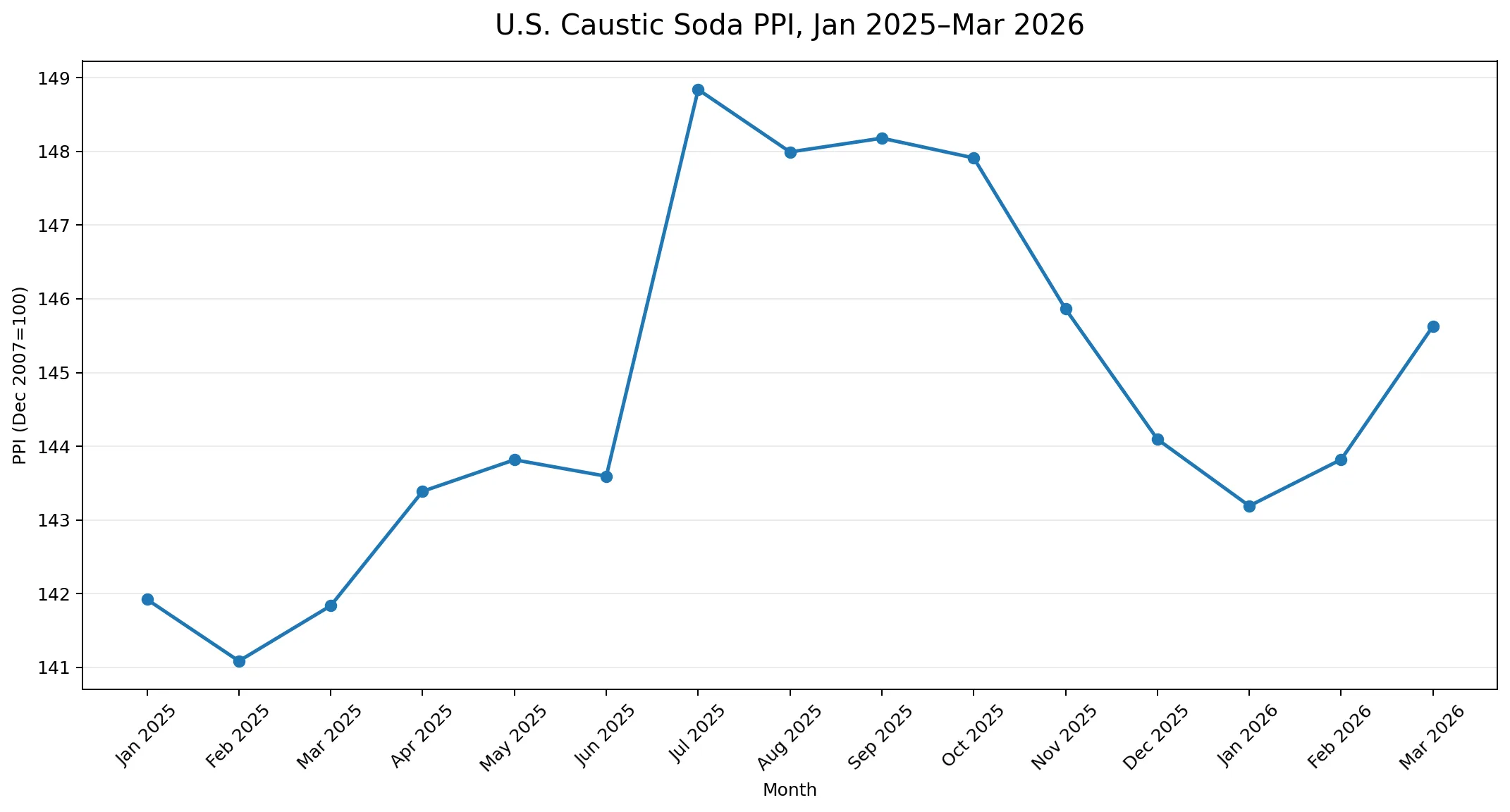
The divergence between the quarterly decline and the mid-March rebound suggests that the latest price increase was primarily a short-term response to changes in global supply and costs, rather than a broad-based tightening of the U.S. domestic market.
Middle East Supply Disruptions Increase Global Cost Pressures
A key factor influencing the March market was the changing global supply chain environment. Developments in the Middle East, together with shipping risks around the Strait of Hormuz, increased market attention on the international movement of crude oil, naphtha and petrochemical products. According to ChemAnalyst, nearly 30 force majeure reports involving production facilities in Asia and the Middle East had been recorded by mid-March, with export availability affected in some regions and international buyers seeking alternative sources.
For the caustic soda market, disruptions to overseas supply do not necessarily translate into an immediate shortage in the U.S. market. However, reduced availability from some origins can increase uncertainty around international supply and contribute to higher ocean freight, diesel and other logistics costs. For buyers sourcing material across regions, uncertainty over transit times and landed costs also encouraged a more cautious approach to spot procurement.
Stable U.S. Domestic Supply Limits Further Market Tightness
Compared with markets that rely more heavily on imports, the U.S. caustic soda supply system remained relatively stable in March. Supported by domestic natural gas availability and generally normal operating conditions, major U.S. producers continued to operate without significant disruptions. Gulf Coast inventories also remained within broadly normal ranges, while domestic production and imported material continued to provide a relatively balanced supply base. As a result, disruptions to global supply did not translate into a broad-based shortage in the U.S. market.
The cost structure of U.S. domestic production also remained an important factor for the market. Although higher global energy and raw material costs increased overall production and logistics expenses, U.S. producers continued to benefit from relatively competitive domestic feedstock costs compared with some overseas suppliers. This cost differential supported domestic supply availability and reduced the likelihood that external supply disruptions would result in a sharp and sustained increase in U.S. caustic soda prices.
Cautious Downstream Demand Caps Price Gains
Demand was not the primary driver of the increase in U.S. caustic soda prices in March. Purchasing activity across major downstream sectors, including PVC, pulp and paper, and alumina, remained relatively cautious, while some end-use markets were affected by seasonal softness. ChemAnalyst indicated that overall U.S. caustic soda consumption remained moderate, with buyers continuing to manage inventories closely and largely purchasing according to near-term requirements.
As a result, the March price increase was driven more by supply-side risks and higher logistics and production costs than by a significant improvement in end-user demand. If global supply disruptions persist, some buyers could increase procurement to reduce exposure to potential supply or logistics risks. However, without a meaningful recovery in downstream consumption, the scope for a sustained price increase may remain limited.
Logistics and Energy Costs Become Key Market Variables
As March draws to a close, logistics and energy costs remained key factors in the U.S. caustic soda market. Higher international diesel and ocean freight costs increased the landed cost of imported material and the cost of interregional transportation, while also strengthening the link between U.S. pricing and developments in international markets. At the same time, relatively favorable domestic natural gas supply conditions continued to provide U.S. producers with a comparatively competitive cost position.
Differences between domestic U.S. production costs and international logistics costs could contribute to greater divergence between pricing trends in the U.S. and those in Asia and the Middle East. Market participants will continue to monitor U.S. production costs, Gulf Coast inventory levels, international freight rates and changes in caustic soda export availability from the Middle East.
U.S. Caustic Soda Market Remains Firm but Fundamentally Balanced
Overall, the U.S. caustic soda market in March 2026 was characterized by temporary price strength, stable domestic supply and cautious downstream demand. Disruptions to global supply and higher logistics costs provided support to prices, while stable domestic production, inventory levels and regional supply availability limited the potential for a significant tightening of the U.S. market.
In the near term, U.S. caustic soda prices will remain sensitive to changes in international supply and logistics costs. The direction of the market will depend on the duration of global supply disruptions and the extent of any recovery in procurement from major downstream sectors, including PVC, pulp and paper, and alumina. For export suppliers, the March price increase does not necessarily indicate a broad-based recovery in U.S. import demand. Market participants will therefore continue to assess international price levels, ocean freight costs, regional arbitrage economics and domestic U.S. supply conditions when evaluating the market outlook.
Sources: ChemAnalyst.