
In September 2024, 36 ports along the U.S. East Coast and Gulf Coast faced the possibility of a large-scale strike, which would have been the first such strike since 1977. The contract between the International Longshoremen’s Association (ILA) and the U.S. Maritime Alliance (USMX) is set to expire on September 30. If the two sides failed to reach a new collective bargaining agreement, approximately 45,000 dockworkers could go on strike on October 1.The potential strike would affect 36 ports stretching from Maine to Texas, including major ports such as New York/New Jersey, Savannah, Norfolk, Baltimore, Houston, and New Orleans. These ports handle approximately half of U.S. maritime trade, and the Gulf Coast is a key production and export region for U.S. petrochemical products. If the strike went ahead and continued, it could disrupt imports into the United States as well as exports of chemical products such as PVC, PE, and PP, potentially pushing up logistics costs for chemical products in global markets.
Why Is a Strike Possible at U.S. East Coast and Gulf Coast Ports?
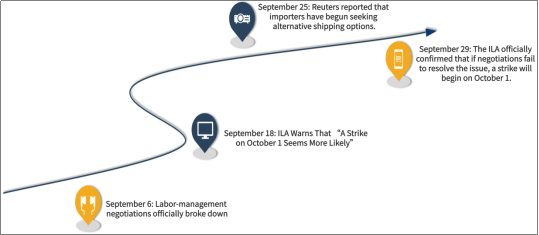
The current labor contract was set to expire on September 30, while negotiations had reached an impasse.The ILA, which represents dockworkers at ports along the U.S. East Coast and Gulf Coast, had been negotiating a new collective bargaining agreement with USMX. Talks broke down in June and had not resumed by late September. The two sides have been unable to reach a new agreement since negotiations broke down in June.
The core disputes center on two issues:First, the union was seeking a 77% wage increase over six years to compensate for inflation and rising living costs, while USMX had offered a significantly smaller increase; Second, the union opposed further port automation, arguing that automated equipment and gates could reduce dockworker jobs. Port operators, meanwhile, sought to expand automation to improve efficiency and productivity. As of the end of September, the two sides had still not reached an agreement.The Biden administration was closely monitoring the negotiations, but by late September, there were no plans to invoke the Taft-Hartley Act to prevent a strike. The law allows the president, under certain circumstances, to suspend a strike and impose an 80-day cooling-off period. Biden ultimately said he would not intervene to block the potential strike, citing the importance of collective bargaining.As a result, the risk of a strike on October 1 remained high if the two sides failed to reach an agreement by September 30.
36 Ports at Risk of Strike Could Disrupt U.S. Supply Chains
The potential strike would affect a broad stretch of the U.S. coastline, from Maine to Texas, covering 36 ports.The major ports affected include: New York/New Jersey, Savannah, Baltimore,Norfolk, Miami, New Orleans, and Houston.
The affected ports handle a substantial share of U.S. container traffic, accounting for more than 68% of container exports and approximately 56% of container imports. Together, they also handle roughly half of U.S. maritime trade. Among U.S. East Coast ports, with the exception of the Ports of Los Angeles and Long Beach, the remaining five of the top six U.S. ports are located on the East Coast and the Gulf Coast. As a result, the potential impact of the strike would extend well beyond the affected ports, disrupting supply chains across the United States and potentially affecting global trade flows.
Economic and Supply Chain Impacts
J.P. Morgan analysts estimated that a prolonged strike could cost the U.S. economy up to $5 billion per day. Oxford Economics separately estimated that a one-week strike could reduce economic activity by $4.5 billion to $7.5 billion.
Analysis by Sea-Intelligence shows that normal traffic at East Coast ports in October is projected to be 2.3 million TEUs, with approximately 13% excess capacity. a one-day strike could create a backlog of around 74,000 TEUs, which would take roughly six days to clear. However, if the strike lasts a week, the backlog might not be cleared until mid-November. A three-day delay in vessel operations would require an entire week to clear the backlog.
For chemical and pharmaceutical manufacturers, raw material supplies could run out within 2 to 6 weeks. Furthermore, with the strike coinciding with the run-up to the U.S. presidential election and the approaching holiday shopping season, it could reignite inflation.
Chemical Exports Could Face Significant Disruptions
The U.S. East Coast and Gulf Coast are not only major gateways for imported consumer goods but also important centers for the production, storage, and export of chemicals and petrochemicals. The U.S. chemical industry is highly concentrated along the Gulf Coast, particularly in Texas and Louisiana. Houston and the surrounding area are home to a large number of refining, chlor-alkali, polymer, and basic chemical production facilities. In U.S. chemical trade, A significant share of U.S. chemical trade moves by sea.
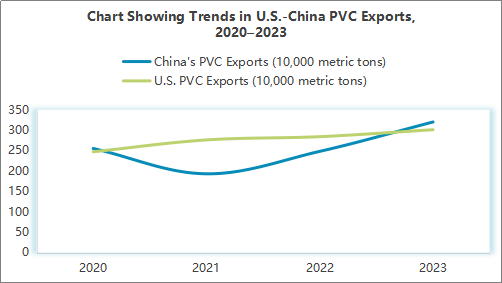
In a September 27 analysis, Argus noted that containerized products such as polyvinyl chloride (PVC), polyethylene (PE), and polypropylene (PP) would be among the most affected by a strike. In 2023, U.S. PVC exports reached 3.3 million metric tons, an 18% increase from 2022. Should a strike occur, these exports would be directly disrupted. Some traders were still finalizing October shipments, but trading activity had slowed as buyers worried that a prolonged strike in Texas and Louisiana could leave cargo stranded at ports or in warehouses.
A shift toward West Coast ports could also lead to congestion and higher freight rates. CMA CGM announced that it would impose local port surcharges starting October 11. Shippers shifting to West Coast ports will lead to congestion and sharp increases in freight rates. If the strike goes ahead, freight rates could rise further, while higher logistics costs could limit the ability of exporters to raise prices. If the strike proceeds as planned, it will further drive up freight rates, and higher logistics costs may prevent export prices from rising.
Conclusion and Outlook
As of late September 2024, the potential strike represented the most significant U.S. port labor disruption since 1977. The 36 affected ports handle approximately half of the nation’s maritime trade, accounting for 41% of total U.S. port throughput. A short strike lasting only a few days would likely have a more limited impact, but a strike lasting more than a week could create a much larger backlog and prolong supply-chain disruptions for several weeks.Sea-Intelligence notes that a three-day vessel backlog requires an entire week to clear. For Chinese chemical exporters and traders serving the U.S. market, closely monitoring labor negotiations, evaluating alternative logistics routes, and planning shipments in advance will be critical in the coming weeks.